By Jill
Sometimes we may wonder if we are being a good friend. Perhaps you are looking to improve your current relationsips or make new friends. Maybe how to be a better friend has never crossed your mind.
Everyone has a different definition of what they believe friendship to be or what they want from friendship. Often, no one teaches us how to be a friend…we learn it as we live and make mistakes and by observation of how our family members related in their friendships.
Continue reading for tips that will help your friendships and bring self-awareness to how you are showing up in your friendships, the “definition” of friendship, and whether your friendships may be mismatched due to having different values.
Tips to Be a Better Friend:
Make scheduling as easy as possible. Do not leave them guessing about the time. Get back to someone with a, “Let me get back to you as soon as I check my schedule” so they know that you want to meet up. Then within a reasonable amount of time, give your friend a few scheduling days or weeks and times that work for you. When they respond, confirm with a clear response. I have had friends thumbs up or like my message which left me unsure of whether we were meeting or not or unsure of the time. Those types of responses leave your friends guessing and often they will try to get a clear response. If someone needs to change the time, respond with, “Yes that works,” or if it does not work, suggest an alternative, “That time doesn’t work for me, but how about ___,” or “How about that time on a _____ day instead.” Many people have expressed that friends going back and forth about scheduling, making it difficult to schedule is stressful or hard on the relationship. Try to make it easy. When you cancel and reschedule many times, it also makes it difficult. Sometimes life gets in the way.
Afterall, you want to give off the message that your friend matters, so it is helpful to avoid the back-and-forth cancelling and rescheduling that sometimes occurs in some friendships.
Some people find it easiest to maintain friendships when they have a recurring schedule. That may look like once a week or once a month on the same day of the month. Then you both don’t have to think about it too much.
For some people, finding the location can be time consuming and make them not want to make plans if they are busy or overwhelmed. Having a few “go-to” locations you both like helps you decide or you can simply both agree to do the same thing once a month at the same place for awhile just to keep the friendship going.
Many friendships thrive around a shared activity. For example, some people enjoy working out, playing sports together, or going for a walk. Another tip could be scheduling a specific time, “11:00-12:30” so the end time is clear and that can eliminate other misunderstandings.
Check in the day before to see if the day and time still works. Some people forget. It is best to just make sure by saying, “Are we still on for tomorrow?
It is helpful to say when you are on the way or some of my friends say their ETA.
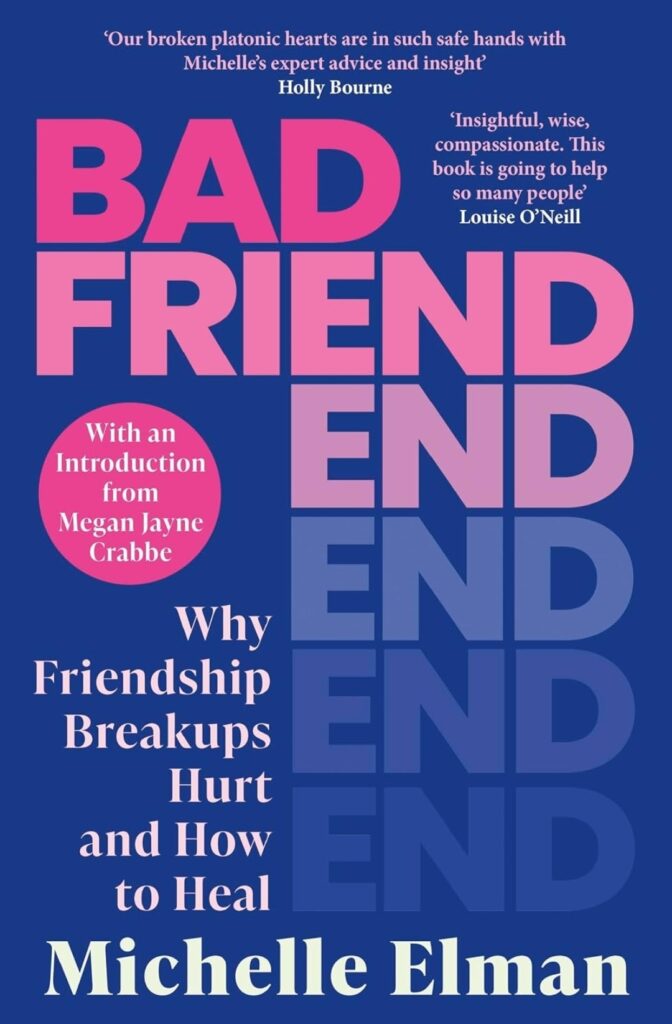
A tip I heard in the book by Michelle Elman, “Bad Friend: Why Friendship Breakups Hurt and How to Heal” discussed how she asks her friends if they want her advice first before she offers advice. This can help avoid a lot of hurt feelings.
Some friends just want support where you say, “I am sorry you are going through that” and want to know that someone cares rather than wanting advice or for you to fix it for them. Humans are not meant to hold in suffering alone and keep it to themselves. That is very unhealthy since we are inherently social creatures and evolved to give and receive social support and thrive in groups, not in isolation or going it alone. When your friend tells you something tough they are going through, it is helpful to tell your friend that you are there for them or ask how you can help or if they just want to vent.
The author, Michelle Elman also discussed how saying her opinion of her friends’ significant others has backfired and it is best for the friendship not to comment on their partner even if you want to protect them or help them and even when they temporarily break-up or ask for advice.
Elman suggests that sometimes setting boundaries and saying, “I love you and I want to help, however I think it is best you ask a different friend about that.” She said she told a friend who kept hashing out a recurring relationship problem something similar, however I find some of the examples she gave a bit harsh. I recommend her book, “Bad Friend: Why Friendship Breakups Hurt and How to Heal” because she gives many examples of what to say, healthy boundaries to set, and how to solve some friendship problems. The book is also validating if you are going through a confusing friendship issues or have a “what just happened,” moment in friendship.
True communication always is more valuable than superficial communication.
Examples of truly communicating are: asking your friend how they are and then always sending a follow-up response to make sure your friend knows you received their reply.
Superficial communication consists of sending memes, quotes, and reels and not much checking-in between meet ups.
The term, “breadcrumbing” does happen in friendships too and not just romantic relationships. This is where someone sends small “breadcrumb” of communication, but doesn’t fully commit to a relationship.
When talking to romantic interests, some people breadcrumb and send memes, sometimes short communication and may disappear for days or weeks. They rarely ever make plans or avoid plans. This also happens in some friendships. “The ambiguity is confusing to those on the receiving end” where they always wonder where they stand or if they are even friends anymore and “can occur in personal relationships and professional relationships as well,”(Psychology Today: “Breadcrumbing”). The person doing the breadcrumbing wants to keep the relationship going with the least effort possible.
Being a better friend includes communicating in a reciprocal way and if you are too busy and unable to, you can say, “I am unable to respond right now, but will get back to you” or another similar response.
If you need a break from the friendship or are unable to communicate for awhile, it is best to simply say, “Things are busy for me right now so I will have to step away from our communication for awhile.”
Curiosity is best. If you are upset at something they said, it is better to ask more questions first instead of reacting. Curiosity is also helpful when they tell you something difficult in their lives. Instead of coaxing or dismissing it, you can ask follow up questions and it helps you better understand what they are truly going through and what they may need from you and the friendship. If you reply with something similar that happened to you, it is not helpful or supportive to their issue that they were vulnerable enough to bring up.
Friendship is not always about just having fun with someone. They are a whole person with a past, sometimes trauma, current stressors and challenges, ambitions and dreams, and more. It is unreasonable to expect friends to not be able to share their full self with you or parts of their personal life. Friendship is there to get-to-know someone and also share activites and interests. Friendships can be inspiring and motivating. Friendships can be fun and light-hearted, but people go through life changes and challenges and cannot always be light-hearted.
It is unreasonable to expect someone that is going through grief and loss to be fun all of the time or even fun at all for a long time. Should you abandon them and stop being around them because they are sad? A true friend would be there through all seasons of life and try to understand.
Remember, everyone has different expectations and even different defintions of what friendship means to them. It may help bringing up what you want from the friendship and asking your friend the same.
The word relationship has the word “relate” in it and we need to stop and think how we relate to others in a reciprocal way.
If a friendship is not recipricol, it may be time to step back. Sometimes it is helpful to see if you are the one always initiating plans or conversation, if they will do the same if you stop initiating.
Being a good friend means asking questions and getting to know your friend’s inner world and likes and dislikes.
Remembering what they like and following up on things they mentioned going on in their life is also a sign of being a good friend.
Figure out what you value most in friendships. The book I mentioned, “Bad Friend,” talks about values in friendship.
Your values may be “being understood” or “respect” or “humor” or “trustworthiness” etc. Once you know your values, it helps you find friends with mutal interests and the qualities you are looking for in friendship.
Be present. Put your phone away. Do not interrupt. Respond, check-in, be reachable and do not disappear in hard moments.
I like the defintion of friendship cited in Michelle Elman’s Book, “Bad Friend” where she mentions Luvvie Ajayi Jones podcast, “We Can Do Hard Things,” defining friendship as ‘taking some responsibility for that person’s care’, and Elman also cites, “studies from 1984, the defining characteristic of a friend was shown to be someone who ‘volunteers help in a time of need’.” A friend is a whole person and do not deny them of their feelings, emotions, and experiences by expecting them to only be fun. Life has twists and turns and they may have down periods of breakups and grief and loss.
Exercise:
Tak a pen and paper and write down what friendship means to you. What do you value in friendship? Examples of values in friendship may be humor, fun, honesty, being understood, supportive, etc.
The book I recommended (as an amazon associate I earn from qualifying purchases), Bad Friendship: Why Friendship Breakups Hurt and How to Heal” explains values in friendship in further detail. I have linked it below if you want to discover more about friendships. The author also discusses roommates, how to live with friends, and other tips.
If what you value in friendships is mismatched and not qualities possesed by the people you spend time with, it may be best to find new friends or adjust your expectations.
You can get different friendship needs met by different friends rather than trying to force someone to adjust or change to meet your needs.
Remember, “It’s much easier to change the people you spend time with rather than changing them. As the saying goes, ‘The clown is going to keep acting like a clown’” quoted from the book, “The Wealthy Spirit” by Chellie Campbell.
For more tips on improving relationships, read this next: Level Up Relationships By Giving Meaningful Compliments That Last a Lifetime
Other Sources: Psychology Today: “Breadcrumbing”