

Create the Life You Want by Choosing Who You Become
This article will help you with a goal setting framework to help you shift your identity to the version of you that reaches your goals. The article also discusses the “100 Workout Philosophy,” how to track your goals and determine how to become your best self, and includes a free, goal setting PDF.
Your current life is a result of all the decisions and actions you made up to this point. They led you to where you are.
“A mighty tree grows from a tiny seed.
A pagoda of nine stories is built from small bricks.
A journey of three thousand miles
Begins with a single step.”-“Tao Te Ching” by Lao Tzu.
The way we think affects our actions.
The way we act and our actions become our character.
Our actions produce results.
Our character and results becomes our identities.
Our actions and identities then create a life whether we are intentional about the outcome or not.
“We are what we repeatedly do. Excellence, then, is not an act, but a habit,”-Aristotle.
We can try on different identities.
The actions of the person we have become creates the results we want (or no longer want).
You have the ability to choose and act a different way.
You can change your life and outcomes by changing yourself.
It is not easy. We all have subconscious beliefs, deeply ingrained habits, and many of us have limiting beliefs unless we 100% sure we are aware of all of them and worked on them.
Creating Your New Identity
Most people do not have an identity that is aligned with the future they want to create.
If you never had to worry about money? How would you spend your time?
What if this new way of spending your time can be incorporated into the present moment slowly and become your new life?
What if it does not have to be a fantasy or ideal life?
I will show you how it is possible to begin to slowly shift your identity and self concept.
Your self concept is how you view yourself and who you think you are.
“What I have become is now my chief obstacle. It is what stands in the way…” of the next half of my life. “Am I living my life or (am I) living the received scripts of someone else?” (James Hollis , PHD).
How?
Change your identity to change your future.
In order to do this, you need to change the stories you tell yourself and your past programming.
Carl Yung said, “I am not what happened to me. I am what I choose to become.”
Rewrite Your Internal Story Writing Exercise:
List any doubts you have and then think for a long time where they may have originated.
Any doubts of not be able to achieve your goal.
When was the first time someone said that to you or your first experience that may have caused the doubt.
Is it true? Is it absolutely true what they said? How could they know.
Can you write down examples showing how what they said was not true.
An example may be someone taught you that in order to be rich, you have to work long hard hours for your money. Then find examples of successful people who set up systems where they make money without constantly working.
There are many examples to disprove limiting beliefs if we look at others doing what we aspire to do.
For example, we may believe only a talented or creative person can do something, but that is not true. They had to learn how to do it and they had to try many times before they learned. To run fast, you must first begin running. To be a painter, you must paint and practice various techniques.
Continuing something is how you get good at it and how you learn.
Making mistakes is how we learn.
Obtaining knowledge or beauty takes effort in order to look “effortless.”
Why?
You may have accomplished all of your goals and feel like something is missing.
Or maybe you have goals you feel are impossible for someone like you.
Goal Setting Exercise:
1. In order to change being stuck, think of your most important future goal and write it down in detail.
2. What would your life be like if you could have ultimate success in every area of your life?
Not just what you think is possible, but your ideal possibilities.
3. What would your life look like, feel like, and taste like?
4. Also find your why. Why do you want to accomplish this?
If it is obtaining something like a new house; what do you want to do with it besides simply living in it? Be specific.
Knowing your why keeps you motivated.
Having a bigger reason that is more specific than just “success or financial freedom” is more motivating.
For example, “I want privacy and freedom to do what I want.” Money can give you privacy, freedom to choose what you want and do what you want.
5. Are you able to write down your goal and then take the smallest step towards it.
Make your goals into 15 minutes a day, small and easy. Once you do the 15 minutes, you may want to work on it longer or you can stop. Even huge goals need to be broken down into 15 minutes you can handle and do daily.
6. Write down big goals. Small goals. Daily goals. Weekly Goals. Monthly Goals. More on that below.
Each area of life to consider:
1. Health & Wellness
2. Career & Professional Growth
3. Personal Development
4. Relationships & Family (community, romantic, friends, and family)
5. Hobbies
6. Finances
7. Mental & Emotional Well-being
8. Home & Environment
9. Fun, Novelty, Adventure, & Lifestyle
10. Spirituality or Inner Beliefs (morals, code, ethics, inner world)
11. Community & Contribution
12. Daily Routines & Systems
I. Goal Setting How To Framework to Incorporate the Goals into Your Daily Life:
1. Make daily goals that are small steps to work towards the larger goal.
2. Identity milestone goals and set those out to be 3 or 6 months ahead.
3. Have weekly checkins to see if you are on track with your daily goals to reach the milestone goals.
4. Also have separate annual goals.
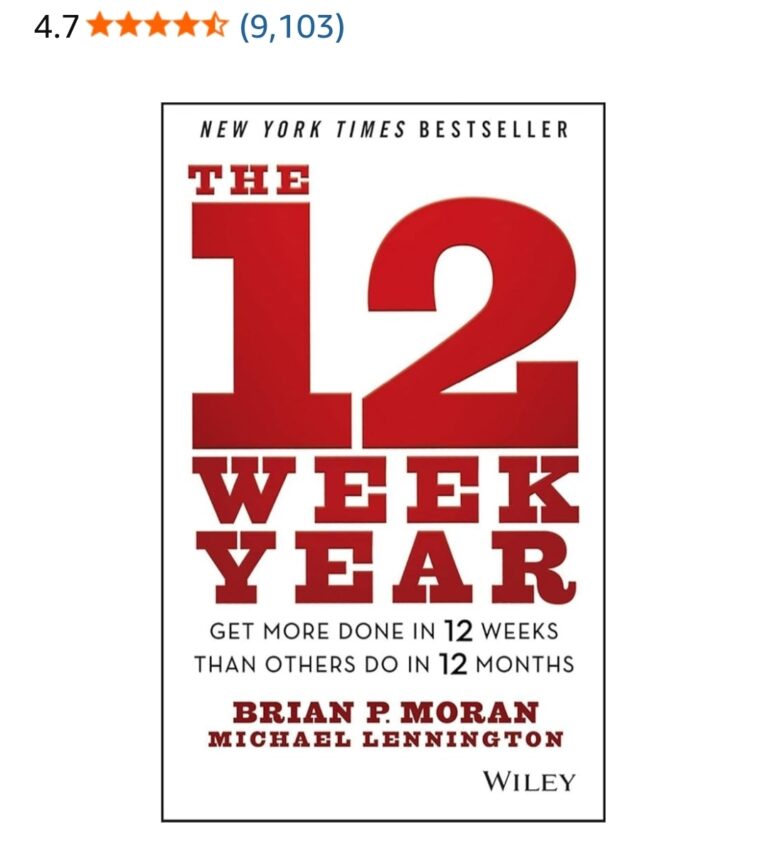
A book called “The 12 Week Year” by Brian P. Moran & Michael Lennington discusses 12 week years where goals are divided into 12 weeks instead of making new year’s resolutions.
5. Have 5 year goals and 10 year goals. With finances, this could mean calculating how much you need to save weekly or monthly into an account and let it compound the interest every year to reach your 10 or 20 year goals.
6. Take the small steps towards each goal. Each act takes you closer to achieving your goal.
100 Workouts Philosophy
Sahil Bloom, author and public figure has the 100 Workouts Philosophy. That you are 100 workouts from the body you want or achieving your fitness goals as an example. It may be 100 hours of focused work or he says “100 bland meals.”
Bloom says to view this hard work as “necessary cost of entry” for achieving your goals.
7. Do not wait to feel motivated. Sahil Bloom also mentions doing 100 Day Challenges to build discipline and focus on a goal to remind us to “stop overthinking and just start.”
8. Organize your steps (goals) into your daily routine.
You can also reduce goal categories to main categories to simplify:
Health, Finances, Relationships, Hobbies, Career
Become 1% Better Every Day:
Goal setting and working towards goals does not have to be miserable or overwhelming.
I find it fun. I have made difficult changes like completely changing my career after 22 years of teaching music, playing in orchestras, and gigs and studying music for 30 years.
I went on to completely change my life to waking up at 5:50 AM to be a professional day trader and I used to be a night owl. I had seasons where I woke up early to run 8 miles before the weather got hot just to avoid the heat.
I love the stock market and I enjoyed running, even though it was hard. I found beautiful places to run to make it more enjoyable. I gradually worked up to these shifts in sleep.
Other people said having nice workout clothes makes you more encouraged to work out.
I also worked slowly towards building a website, writing, and taking steps towards my goals by taking daily and weekly action that added up over time and enjoyed the small steps.
Running, fitness, learning an instrument, and learning new skills all start with small steps, curiosity, interest, and frequent efforts. These efforts add up over time.
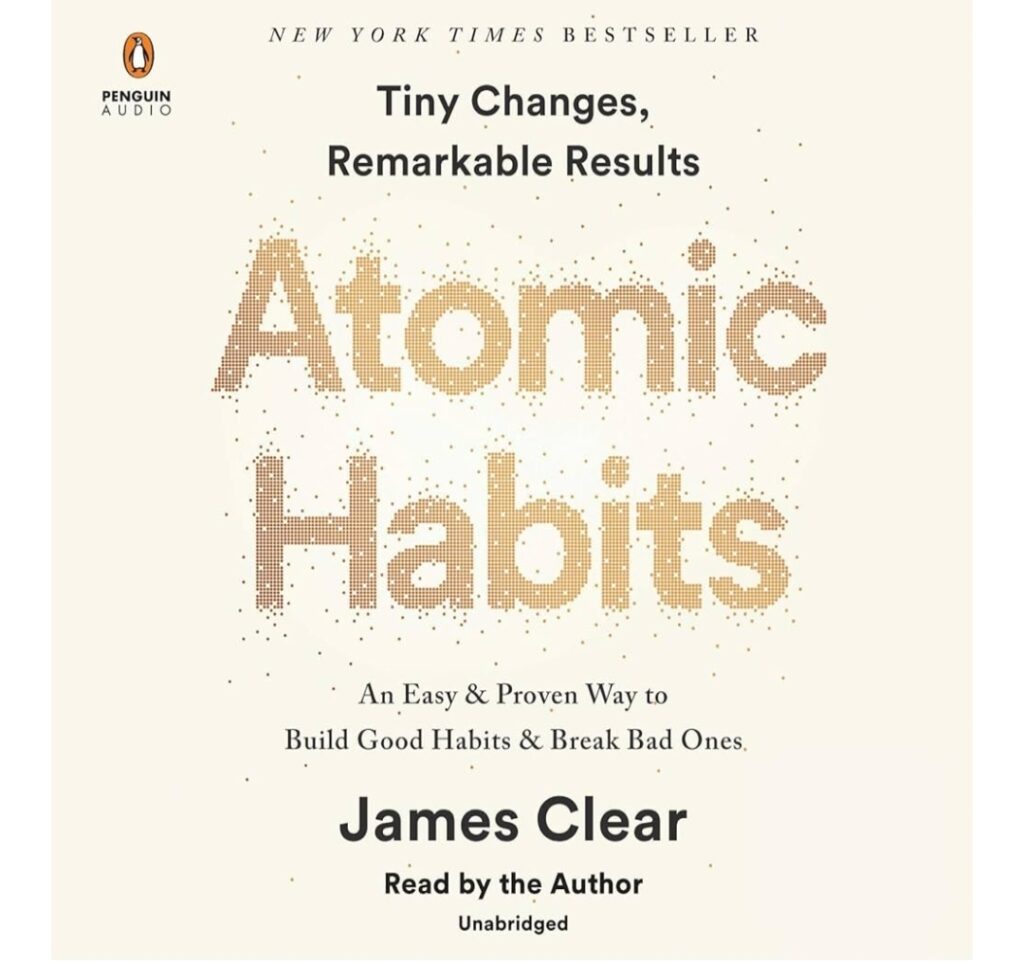
“Atomic Habits” by James Clear is a book that talks about getting 1% better every day. I suggest reading it or getting it on audible because it is highly motivating and will encourage you to make the changes you need, slowly. Very motivating read!
If the future you are imaging is your ideal version, then the actions and life of that future would be interesting, rewarding, and mostly enjoyable.
That is why I don’t think it has to be miserable and 100 workouts of torture, but can be achieved through small daily shifts, gradually increasing efforts and volume over time, and then building up willpower over time to do some of the hardest steps towards your goals.
For example, a marathon is hard even if you train for months or years, but it is a rewarding experience and you can enjoy the race depending on your mindset.
The idea is to become the person who does what you are seeking by doing the actions. Does that make sense?
Writers write. Musicians play their instrument. Bakers bake. Even if you are terrible at it.
You improve by trying, analyzing what went well and what did not work out, researching, finding mentors, trying again, recording progress, and keeping yourself on track by reviewing your goals weekly.
I always said to my students to do things, “One small bite at a time,” and that you don’t have to eat the whole pie all in one sitting like learning a violin concerto. We learn one measure at a time and one phrase at a time.
Goals are best achieved when broken into small bites.
Take a small step or the next simplest step and do not get overwhelmed by everything that needs to be done for the end result.
When you focus on one small step, each step will bring you closer or show you the next step.
Even when you do not know what that next step will be. Action usually leads you to finding out the next step.
“To succeed, be as attentive at the end of an enterprise as at the beginning.” –“Tao Te Ching” by Lao Tzu.
Keep your focus and when you are unfocused, schedule breaks.
Study with deliberate practice to achieve the goal.
Deliberate practice is having a specific target and monitoring if you are reaching it.
If we mindlessly repeat tasks, we are not deliberately practicing.
II. Document Your Progress
Studies have shown we do best in achieving our goals if we frequently review our goals.
Track Progress
1. Compare to past outcomes
2. Make challenges for yourself and schedule them
3. Write down difficulties that came up and record important thoughts and experiences.
4. What did you learn in the journey?
5. Have gratitude towards your goals and future accomplishments along the way. Have gratitude that if you act, you are guarenteed success.
Success is usually not on the first attempt. It takes many attempts to get good at something new and to figure out something new.
Many inventors in history attempted experiments hundreds of times before inventing electriticty, flying a plane, etc.
III. Determine Who You Need to Become
1. Brainstorm or research the qualities of the person that has what you want.
You can look up the qualities and skills required for the career or others who have accomplished your goal and use them as your mentor.
You don’t have to be in communication with them in order for them to be your mentor. You can read anything about them, their books, or absorb their content to find out the information and routines they have that led them to their success.
2. Dress like the new you. Gradually change what you wear to fit the mindseye of your best self.
3. Decide the daily routine of your new identity.
Be specific.
If you want to be an athlete, you decide ahead of time when you do your workouts. You also have workout clothes.
Another example is if you are a trader, you wake up when the market opens and you set aside time for market research.
4. What would you eat? Where would you live? Where do you go daily? Who do you associate with? What books do you study?
Make these new steps gradually become your routine. Usually with goals and changes, it is best to focus on one goal at a time for weeks before adding more goals.
5. Visualization of the actions is helpful, but some studies have shown that visualizing the end result can cause one to lose motivation due to the brain not knowing the difference between reality and what we visualize. This means we get satisfied by our visualization.
We need to take action to reach our goals and each action is a vote for who we want to become.
We need to be intentional about what we are doing and why and who it is shaping us to Be.
If you would like more help in reaching your goals, download my free pdf Inspired Self Goal-Setting Worksheet. You can also read: Stop Start Continue: Reverse Engineering the Path to Reach Your Goals
Resources:
As an amazon associate, I earn from qualifying purchases.
Purchase Atomic Habits Book or Audiobook Here


Love the article! Inspiring!