 By Jill
Biohack Your Health & Mood With Easy to Care For Indoor Plants
This article will explain what are the benefits of indoor plants, which plants help clean indoor air, and easy to care for plants.
Benefits of indoor plants (also see the research studies below):
Reduce stress
Provide peace
Mood enhancement
Lowers blood pressure
Increase of positive feelings according to research
The National Library of Medicine posted a 2021 study: Physiological and Psychological Effects of Visual Stimulation with Green Plant Types where “30 adults in their 20s” had their brainwaves measured when they looked at “real plants, artificial plants, a photograph of plants, and no plants for 5 minutes.”
The study’s findings were real plants reduced stress and promoted relaxation more than the other categories and improved mood.
Artificial plants gave some comfort, but only real plants produced the most stress reduction benefits.
Therefore real, green plants can aid in calming the nervous system and have the most health benefits.
Your brain responds to nature. Even short, 5 minute exposure to nature and plants produces mood benefits and stress reduction.
Additionally, another study at the Clinical Trial Center, Chungnam National University Hospital, Korea, and the Ethics Committee of the Center for Environment, Health and Field Sciences, Chiba University, Japan measured individuals that cared for plants vs working on a computer task and it showed, short, daily care produced health benefits like reduced stress and overall improved mood.
They studied twenty-four subjects that were “randomly distributed into two groups. On the first day of the experiments, the first group (12 subjects) tended to indoor plants while the second group (12 subjects) worked on a document in a word processor, one of the most typical computer tasks, which needs continuous physical activity, like the transplanting task. On the second day, the subjects switched activities. Each subject performed each task at the same time of the day to reduce the effects of diurnal variation.” The study concluded that Analysis of the SDM data showed that the feelings during the transplanting task were different from that during the computer task, study subjects felt more “comfortable, soothed, and natural after the transplanting task than after the computer task.”
An “increasing number of studies on human interaction with nature have demonstrated that contact with nature is favorable to human emotions, physiological functioning, attention restoration, behavior, and health.” (National Library of Medicine: Interaction with indoor plants may reduce psychological and physiological stress by suppressing autonomic nervous system activity in young adults: a randomized crossover study).
And finally, another study in 2022 from the National Library of Medicine linked below: Effects of Indoor Plants on Human Functions: A Systematic Review with Meta-Analyses indicates exposure to green spaces, gardening, and indoor plants significantly improved the well-being of adolescents and elderly.
I started getting indoor plants for their clean air benefits.
The following plants help clean toxins out of the air and I have found are very easy to care for:
- Snake plants
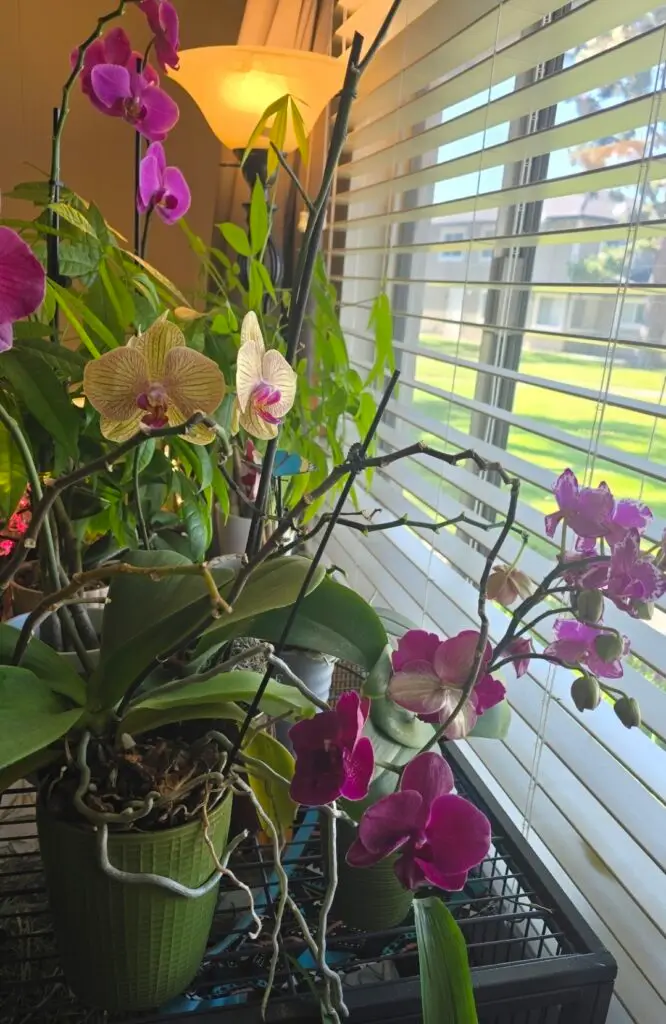
- Orchids
- Peace lilies
- Spider plants
- Money trees
- Chinese evergreens
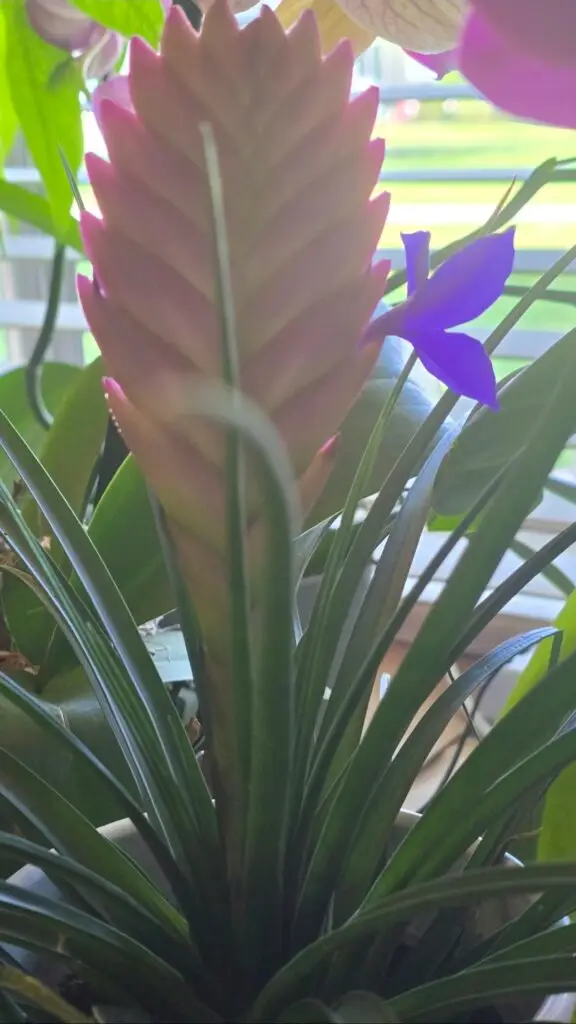
- Bromeliads
According to the University of California, Agriculture and Natural Resources, “Studies show that even a single plant can improve air quality by 25%, with even greater results when multiple plants are added.”
Although their air cleaning effects are very low, I enjoy these varieties and they have lived many years. They only require watering once a week.
I have ordered plants online from amazon and they arrived in the mail, beautiful and healthy.
Here are my easy-to-care for recommendations below and where to buy the live plants on Amazon (As an Amazon Associate, I earn from qualifying purchases):
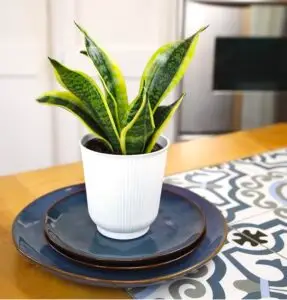
1. Snake Plant:
https://amzn.to/4rvLlwx
2. Red Anthurium (a littler harder to care for. It prefers high humidity). It is the plant in the center, shown below.
https://amzn.to/3O2kSs7
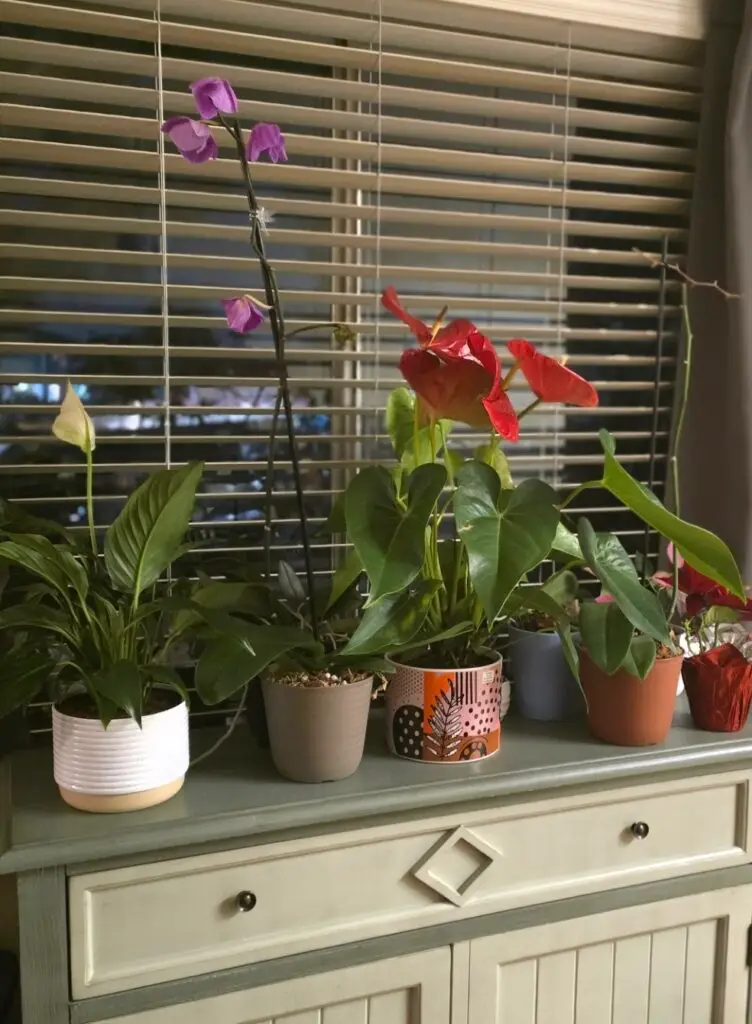
3. Peace Lily, Shown above, the plant on the far left.
https://amzn.to/3NZFbXg
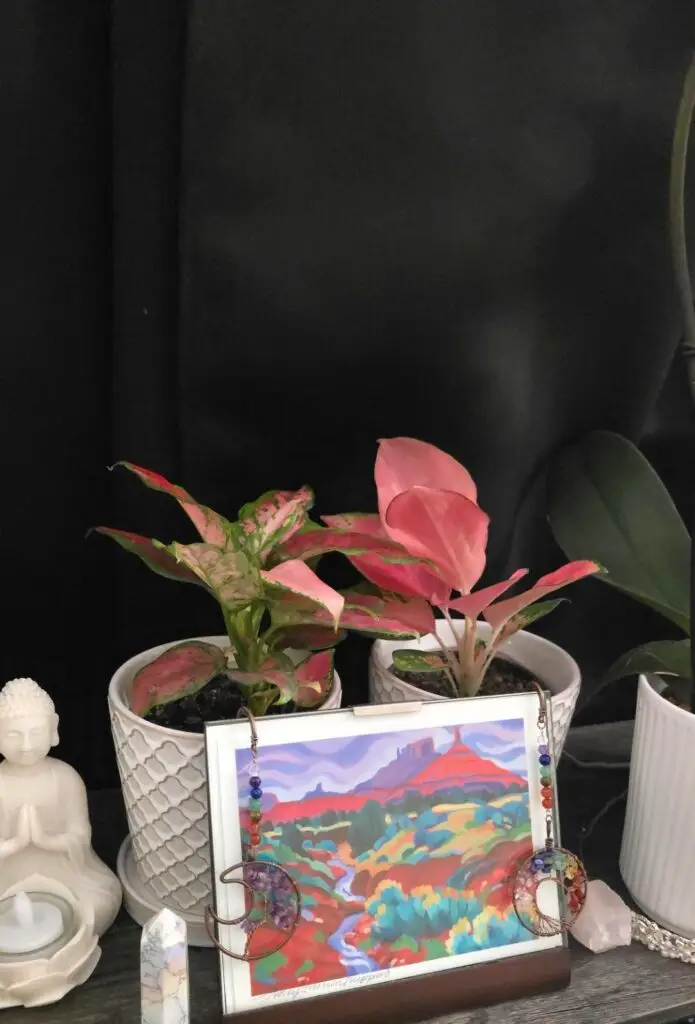
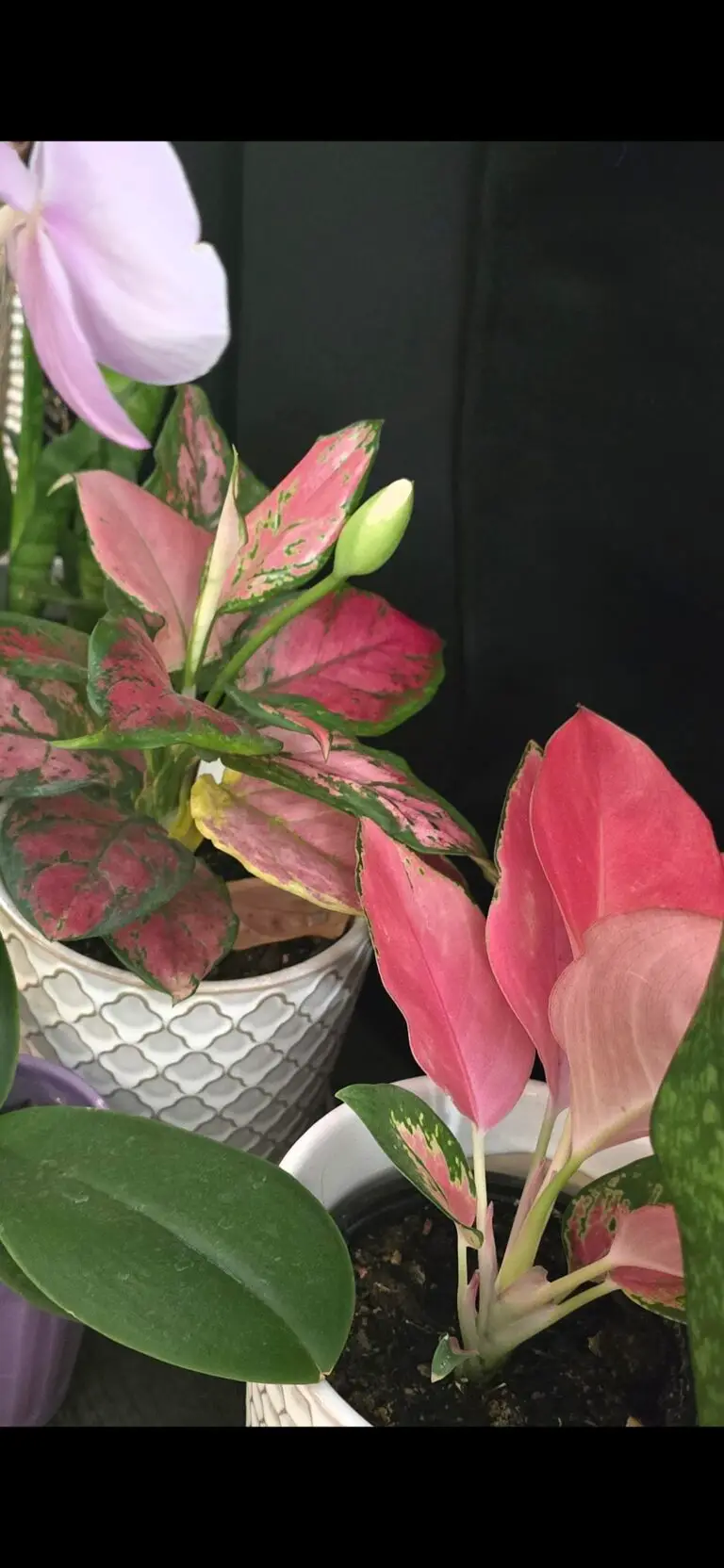
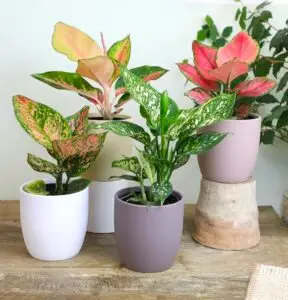
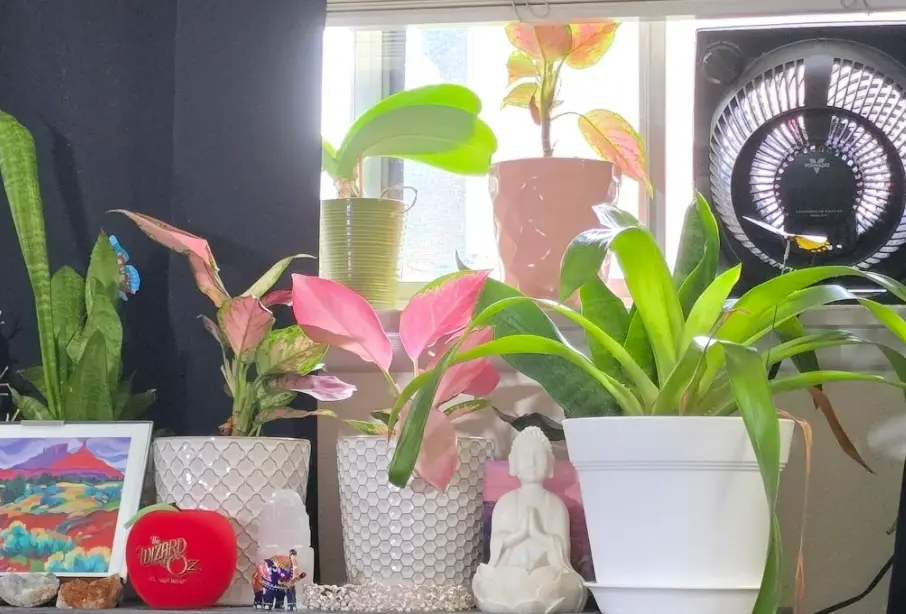
4. Chinese Evergreen (comes in green, pink, or white) shown in the 3 photos below.
https://amzn.to/3ZmrRyG
5. Orchids: I have found many orchids on sale for a few dollars at Lowes and Home Depot. Usually they are placed outdoors when they go on sale.
Indoor Plant Care tips:
Keep all indoor plants by a window. Make sure they get 12 or more hours of light. Put them on the windowsill if you do not get enough light through your windows. Many plants need to be no further than 3 feet from the window, the closer the better.
Less water is better than over-watering. Look up individual watering instructions.
Typically I pour bottled water into each of my plants. I designated Mondays to be watering day.
Count your pour seconds, for example: “one one-thousand” is about 1 ounce when you pour. I pour 1 to 2 ounces per plant making sure water is distributed throughout the whole pot.
Many plants prefer to have the soil dry out between waterings.
Peace lilies like the soil to be more moist but dry a little between waterings. I water peace lilies twice a week.
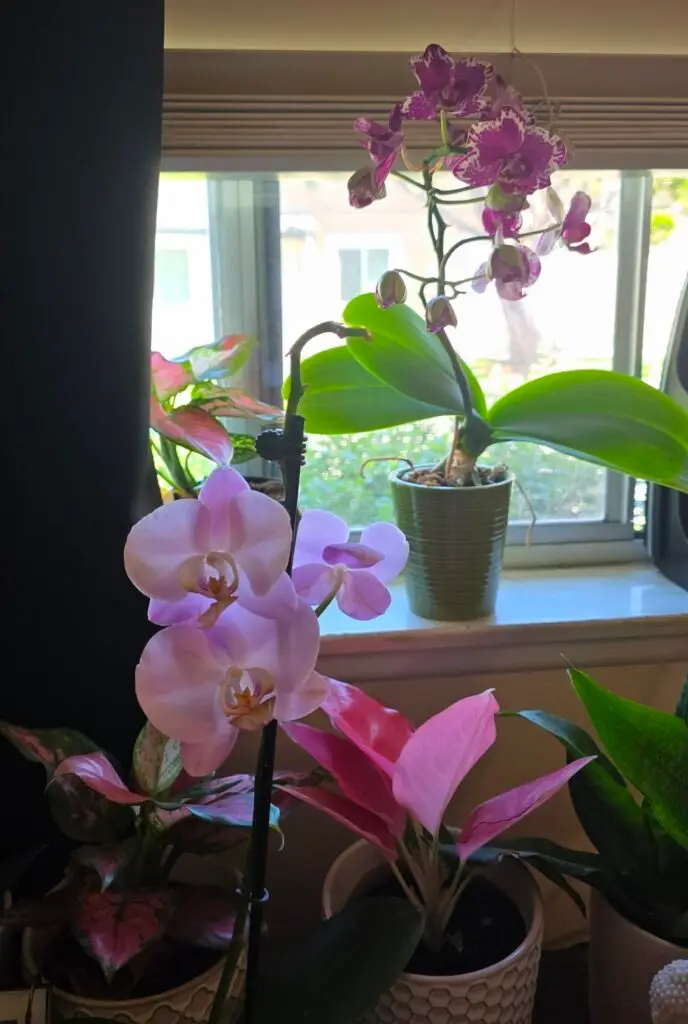
Orchids die when you overwater them. I only water once a week. You can mist them with a spray bottle between waterings if you live in a dry area.
I chose the plants that are the easiest to care for and they have been green and thriving.
Snake plants can survive with drier soil than the other selections. They are the easiest to care for out of the plants I listed and can survive dry climates.
Chinese evergreens come in pink, white, and green and like moist soil.
Make sure your plants don’t outgrow their pots. If they do, cut a plastic pot to take the plant out gently to transplant it or if it has a ceramic pot, dig the sides gently being careful of the roots as you lift it into another pot.
Some of my orchids had black roots which is a sign of fungus/disease. Gently cut out black roots with clean scissors. Clean scissors ensures the plant does not catch other diseases.
Orchids go dormant for awhile before they produce a new spike. The spike begins looking like a root and it grows upward and produces a flower. Orchids can live up to 20 years. They can grow new leaves if you have the bulb as long as the bulb didn’t get over-watered and rot.
Research studies and References:
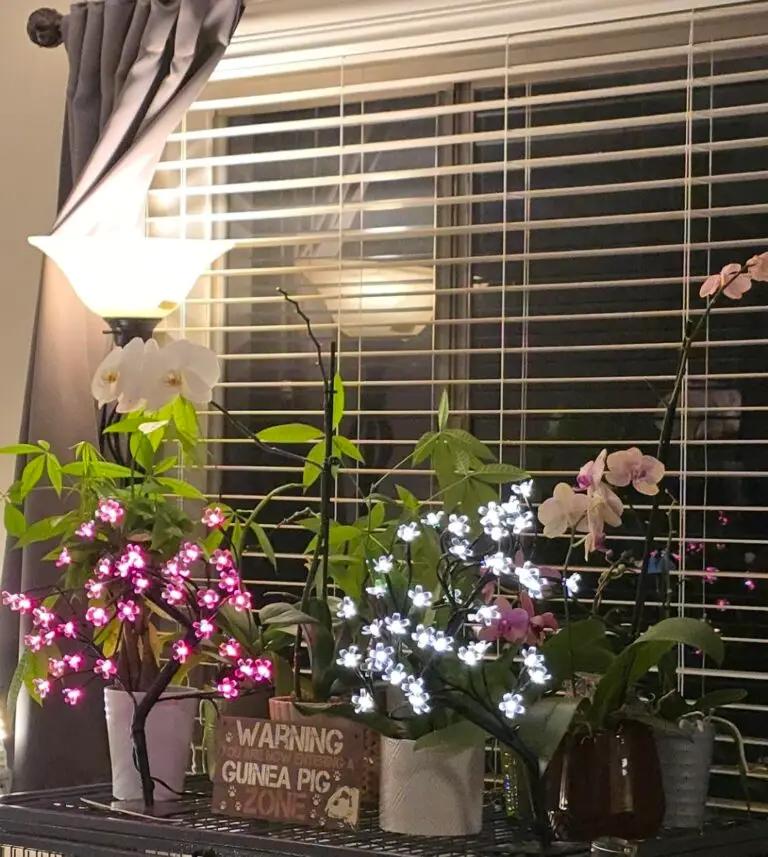

Such a great article with many good tips! I loved the pictures of your plants. Your plants and home look very beautiful!!!