Sun. Jan 11th, 2026

Reviews

What is a HEPA Filter and What Kinds of Air Purifiers Remove VOCs?

HEPA Filters, Air Purifiers, and Indoor Air Quality: Understanding the Differences and Health Impacts

Indoor air quality plays a crucial role in human health, comfort, and productivity. In modern life, people spend an estimated 90% of their time indoors: at home, work, school, or other enclosed spaces.

Unfortunately, indoor air can often be more polluted than outdoor air due to trapped contaminants, synthetic building materials, household products, and limited ventilation. This has led to growing interest in air purifiers, HEPA filters, and other technologies designed to clean the air we breathe.

This article explores what HEPA filters and air purifiers are, how they differ, what types of particles and pollutants they remove (including volatile organic compounds or VOCs), and how indoor air quality affects human health.

What Is a HEPA Filter?

A HEPA (High‑Efficiency Particulate Air) filter is a mechanical air filter designed to capture extremely small airborne particles. To meet official standards in the United States, a true HEPA filter must remove at least 99.97% of particles that are 0.3 microns in diameter.

HEPA filters are made from a dense mat of randomly arranged fibers, typically composed of fiberglass. Air passing through the filter must navigate through many fibers, where particles are captured through several physical mechanisms:

Interception: Particles following airflow paths come close enough to a fiber and stick to it.

Impaction: Larger particles collide directly with fibers due to inertia.

Diffusion: Very small particles move erratically (Brownian motion) and are more likely to hit and adhere to fibers.

Importantly, HEPA filters do not rely on chemicals, electricity, or ionization. They are purely mechanical devices.

What Is an Air Purifier?

An air purifier is a broader category of devices designed to improve indoor air quality by removing or neutralizing airborne contaminants. Air purifiers may use one or more technologies, including:

– HEPA filtration

– Activated carbon filters

– UV‑C light

– Ionizers

– Electrostatic precipitation

– Photocatalytic oxidation (PCO)

In other words, a HEPA filter is one component that may be used inside an air purifier, but not all air purifiers use HEPA filters. The effectiveness of an air purifier depends on the technologies it employs and how well they are implemented.

Key Differences Between HEPA Filters and Air Purifiers:

HEPA filters remove particles while air purifiers may remove particles, gases, odors, and sometimes microorganisms depending on their design.

What Types of Particles Do HEPA Filters Remove?

HEPA filters are extremely effective at removing particulate matter including:

  1. Dust and Dust Mites

Common household dust contains skin cells, fabric fibers, soil particles, and microscopic debris. HEPA filters trap these particles before they recirculate in the air.

  1. Pollen

Pollen grains from trees, grasses, and weeds are a major trigger for seasonal allergies. HEPA filters are highly effective at capturing pollen.

  1. Pet Dander

Pet dander consists of tiny flakes of skin shed by cats, dogs, and other animals. These particles are small enough to remain airborne and easily inhaled, making HEPA filtration particularly helpful for allergy sufferers.

  1. Mold Spores

Mold reproduces by releasing spores into the air. HEPA filters can capture these spores, although they do not kill mold growing on surfaces.

  1. Smoke and Soot Particles

HEPA filters can remove fine particulate matter from wildfire smoke, tobacco smoke particles, and combustion byproducts (but does not remove the gases).

6. Bacteria and Some Viruses

Many bacteria and virus‑carrying droplets are attached to larger particles, which HEPA filters can capture. However, HEPA filters do not “kill” microorganisms; they only trap them.

What HEPA Filters Do NOT Remove:

Despite their effectiveness, HEPA filters have important limitations. They cannot remove gases or odors, including:

– Volatile organic compounds (VOCs)

– Carbon monoxide

– Nitrogen dioxide

– Ozone

– Chemical fumes

These pollutants are molecular in size and pass straight through HEPA fibers.

What Are VOCs (Volatile Organic Compounds)?

Volatile organic compounds (VOCs)** are gases emitted from solids or liquids at room temperature. They are common indoors and originate from:

– Paints, varnishes, and adhesives

– Cleaning products and disinfectants

– Air fresheners and scented candles

– Furniture, carpets, and pressed wood products

– Cosmetics and personal care products

– Gas stoves and fuel‑burning appliances

Some VOCs cause short‑term irritation, while others are associated with long‑term health risks.

Which Air Purifiers Remove VOCs?

To remove VOCs, an air purifier must include activated carbon or other adsorbent materials.

Activated Carbon Filters:

Activated carbon is a highly porous material with an enormous surface area. VOC molecules adhere to the carbon surface through a process called **adsorption**.

The effectiveness of VOC removal depends on:

– The amount (weight) of carbon used

– The type of carbon (coconut shell, coal‑based, etc.)

– Air contact time (slower airflow improves adsorption)

Thin carbon pre‑filters found in many consumer air purifiers may reduce odors slightly but are often insufficient for meaningful VOC removal. High‑quality VOC‑focused purifiers use several pounds of activated carbon or blended media.

Other VOC‑Related Technologies

Photocatalytic Oxidation (PCO): Uses UV light and a catalyst to break down VOCs, though some systems may produce byproducts.

Chemisorption Media: Specialized materials designed to target specific chemicals such as formaldehyde.

Do HEPA Filters Remove VOCs?

No, HEPA filters do not remove VOCs or odors, but there are air purifiers designed to remove VOCs and odors. A purifier must include activated carbon or similar voc removing filter to address gaseous pollutants.

I use HEPA filters with an activated carbon filter to remove vocs. I want to upgrade to a powerful voc removing air purifier that is $900-$1000 someday. I will link the air purifiers I currently use and the ones I want to try in another article and below is my favorite air purifier so far:

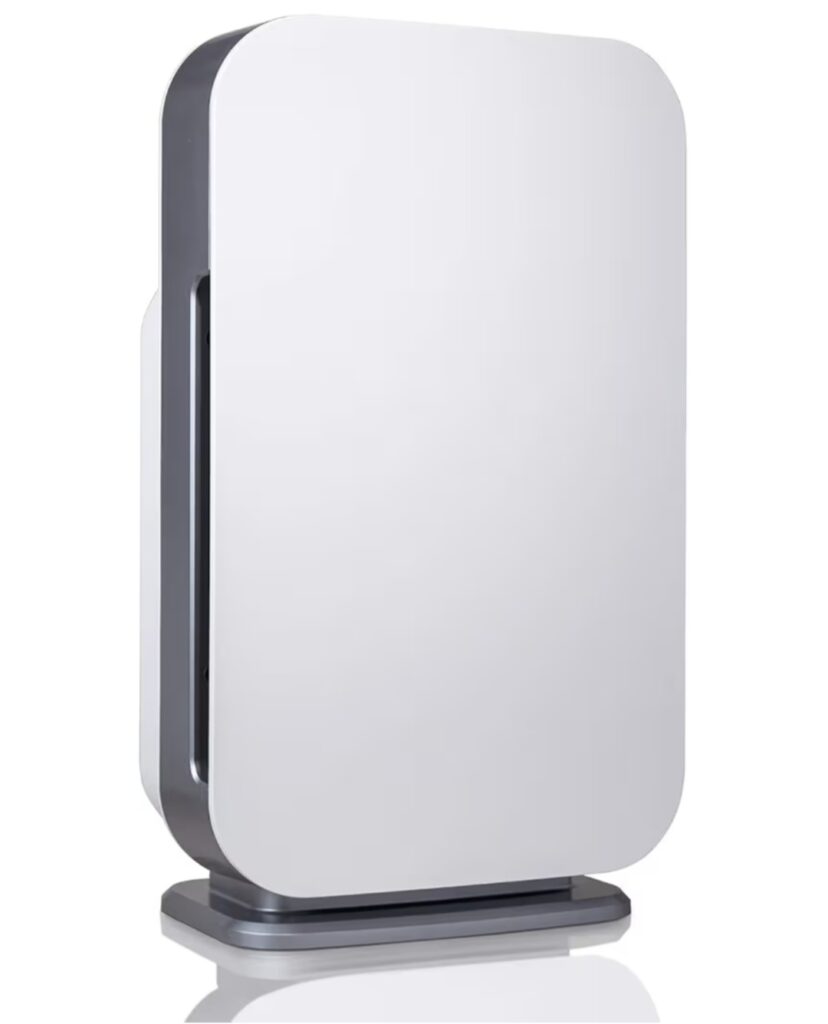
Alen Breathesmart Flex Fresh

Removes vocs and has the activated carbon filter.
https://amzn.to/4b66Sr1

currently $371 on sale from $464. The fresh filter needs to be selected in order to get the voc removal. A less expensive option that does not clean vocs is:

Alen Breathesmart Flex Pure

Currently on sale for $279, normally $349.

https://amzn.to/4r0X5XZ

As an amazon associate, I earn from qualifying purchases.

They have an Exchange Rate of 700 Sq. Ft in 30 Minutes, 1400 Sq. Ft in 1 hour which means it cleans through all of the air in a 1000 Sq. Ft room in 1 hour.

I also own and use other Alen Air purifiers, Honeywell, and Mila air purifier. Many of them have HEPA filters and offer the activated carbon upgrades.

How Indoor Air Quality Affects Your Health:

Poor indoor air quality can impact health in both immediate and long‑term ways.

Short‑Term Health Effects

– Eye, nose, and throat irritation

– Headaches

– Dizziness

– Fatigue

– Worsening of asthma or allergy symptoms

These symptoms are often linked to VOC exposure, elevated particulate matter, or poor ventilation.

Long‑Term Health Effects

Chronic exposure to indoor air pollutants may contribute to more serious conditions, including:

– Asthma development in children

– Chronic obstructive pulmonary disease (COPD)

– Cardiovascular disease

– Reduced lung function

– Certain cancers (from long‑term VOC exposure)

– Cognitive effects and reduced concentration

Fine particulate matter (PM2.5) is concerning because it can penetrate deep into the lungs and even enter the bloodstream.

Vulnerable Populations

Some groups are especially sensitive to poor indoor air quality:

– Children (developing lungs and immune systems)

– Elderly individuals

– People with asthma or allergies

– Individuals with heart or lung disease

– Pregnant women

Improving indoor air quality can significantly improve quality of life for these populations.

Combining HEPA and Carbon for Best Results

For most homes, the most effective solution is an air purifier that combines:

-True HEPA filtration for particles

– Substantial activated carbon for VOCs and odors

I personally have HEPA filters with activated carbon filters to remove VOCs.

This combination addresses both major categories of indoor air pollution: particulate matter and gaseous contaminants.

Improving Indoor Air Quality Beyond Air Purifiers

Air purifiers are powerful tools, but they work best when combined with other strategies:

– Increase ventilation with fresh outdoor air when possible

– Use low‑VOC paints, finishes, and furniture

– Avoid smoking indoors

– Control humidity to prevent mold growth

– Maintain HVAC systems and replace filters regularly

Conclusion

HEPA filters and air purifiers play an important role in improving indoor air quality, but they are not interchangeable terms. HEPA filters excel at removing airborne particles such as dust, pollen, mold spores, smoke particles, and pet dander. However, they do not remove gases or VOCs. To address chemical pollutants and odors, air purifiers must include activated carbon or specialized adsorption media.

Understanding the differences between these technologies allows consumers to choose what type of air purifier they may want to purchase based on their needs whether that is allergy relief, asthma management, wildfire smoke protection, or VOC reduction. Since indoor air quality has a direct and significant impact on human health, investing in the right air purifier for you is not just a matter of comfort, but of long‑term well‑being.

Sources:

World Health Organization

https://www.who.int/news-room/feature-stories/detail/what-are-the-who-air-quality-guidelines

https://www.hepacart.com/blog/dont-be-fooled-by-hepa-filter-types-standard-and-approved-filters#:~:text=What%20is%20a%20HEPA%20Filter,are%200.3%20micrometers%20in%20diameter

https://cdn.who.int/media/docs/default-source/searo/india/news-pdf/advisory-for-air-pollution.pdf?sfvrsn=8407dff2_2

Biohack Your Life By Improving Indoor Air Quality in Your Home and Bedroom

Why Your Indoor Air Quality Matters and How it Effects Your Health and Sleep

I did not know how bad my indoor air quality was til I was sick and sleeping with the windows and bedroom door shut for a week and had headaches and too exhausted to wake up.
My fiancé said the air was terrible like death in my room. I was offended. I also thought maybe he is right. I looked up how indoor air can cause headaches and make you feel worse and more tired. I wasn’t getting healthier. I stayed sick and tired. I ordered an air quality monitor off amazon. I had heard about vocs and did not really know much about them at the time. I started researching.
The air quality monitor showed over 1000 tvoc in my room which is extremely terrible for your health.
What are vocs (tvoc)?
Vocs are volatile organic compounds that “off gas” from household items like rugs, furniture, paint, chemicals, air fresheners, perfumes, candles, clothing, shoes, and electronics (basically everything) and even plant soil off gases a bit. It creates a gas that accumulates indoors and can cause headaches, irritate asthma type symptoms, sleep disturbances, and eyes, nose, and throat irritations, nausea, and dizziness and contributes to indoor air pollution.
According to Epa.gov, vocs can contain harmful “chemicals such as:
Benzene
Formaldehyde
Toluene
Xylene
Dichlorobenzene
Acetone
Terpenes
These chemicals are released as gases, “off-gassing” when the products are used or even just stored in your house.”
I found that having more items in your house means higher vocs. Every single item let’s off its own off gasing unless you get bamboo sheets, specific glue free type rugs that are hand woven with dye free wool yarn etc. The common household items or clothing, athletic shoes, etc all off gas a little and some are extreme. I noticed the vocs climb on my air quality monitor as soon as I close the windows and that shows my household items are off gasing.
As an amazon associate, I earn from qualifying purchases.
Get my Air Quality Monitor Here:
https://amzn.to/4pvA8LU
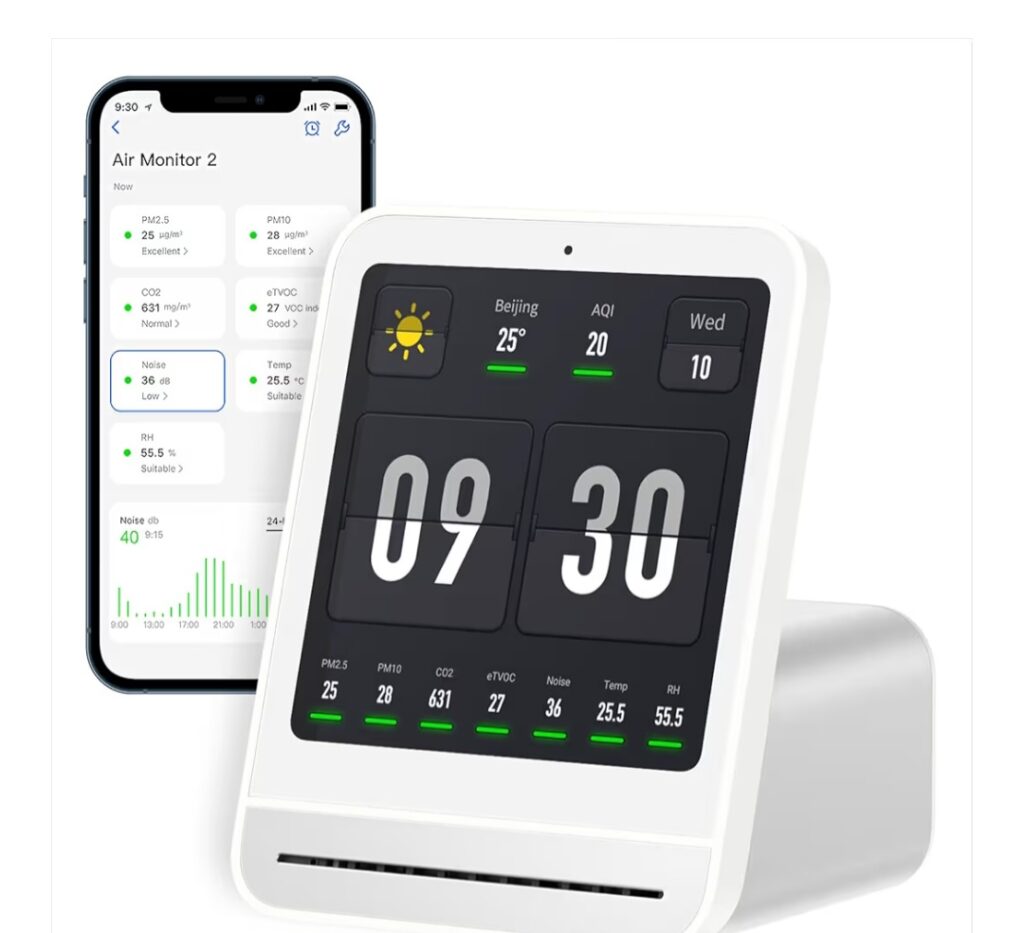
I have used Qingping Air Quality Monitor since 2022 and I leave it plugged in all of the time since it works best if it is continuously monitoring. It is also a bedside alarm clock with touchscreen.
The Qingping Air Quality Monitor 2 provides real-time monitoring of 7 metrics, including temperature, humidity, CO2, PM2.5, PM10, eTVOC and noise level.
What can you do about your indoor air quality?
1. Get an air quality monitor
2. Open the windows for fresh air
3. Use a fan to vent in fresh air or exhaust out old air daily
4. Run exhaust fans
5. Buy a carbon filter HEPA filter air purifier that is upgraded to remove vocs. Regular HEPA filters won’t remove vocs. *more on this to come
6. Get clean air plants like: orchids, snake plants, and peace lilies
7. Sometimes running the Air Conditioning can help lower high indoor humidity along with getting a dehumidifier
8. Storing shoes in a box, closet, or shoe cabinet keeps their vocs a bit more contained than in your airspace.
9. Closing closet doors helps keep your airspace cleaner.
10. Declutter extra items. Purge and donate. Fewer items means fewer chemicals of gasing.
11. Store items away from your bedroom if possible so you can enjoy cleaner air while you sleep (since sleeping is 6-9 hours of your time breathing).
12. Mattresses, sheets, rugs, and shower curtains all have alternative versions that off gas less. Look for organic cotton, wool, bamboo fabrics, PEPA free plastics and products that say “greener/safer chemicals.”
13. Purchase clothing that says it is eco-friendly and uses “safer” chemicals sometomes helps, but depends on if the materials. Rubbers and glues off gas.
What makes indoor air quality worse so you can prevent it? What is measured on an air quality monitor?
Indoor air quality can worsen if humidity is high over 60% or low, under 40%. Most air quality monitors check indoor humidity.
CO2 rises when doors and windows are shut. Humans emit our own vocs when we breathe and release CO2. This builds up when we sleep especially of the room is small and doors and windows are closed.
Pm2.5 is another variable that is measured in outdoor and indoor air quality monitors. Pm2.5 are particles that are harmful to our lungs because they can get trapped in our lungs and can lead to harm to unborn babies, heart disease from prolonged exposure, and asthma. They are created by “combustion of gasoline, oil, diesel fuel or wood” so mostly come from burning wood or candles indoors and can get into your house if the outdoor air quality is poor.
Benefits of Improving Your Indoor Air Quality:
Improving your indoor air quality is a helpful biohack. You will improve your sleep and can reduce headaches and prevent other health complications that can be caused by poor indoor air quality. Another benefit is, more ventilation and using a HEPA filter with activated carbon (must be a filter upgraded to remove vocs in order to be effective) can also prevent the spread of the flu and colds. It is a deliberate, science‑based way to optimize your body’s health, energy, and performance by changing your environment when you take charge of your indoor air quality.
Read my article about air purifiers like HEPA filters with activated carbon filters, *coming soon.
Sources:
Facebook
Twitter
LinkedIn

Meaningful Compliments: Why it Levels Up Relationships When You Give Meaningful Compliments and How To Do It

How to compliment friends and family and why is it important to give compliments:

My Dad gave meaningful compliments that made us feel seen, like our efforts mattered, and who we are was noticed. These compliments lasted a lifetime. You never know what a boost your compliment will bring and how it can help someone in their life. He was the only person who told me I looked pretty and senior prom and he said my violin playing sounded professional at my university junior solo recital. These compliments remain long after he gave them and after his life.

How do we give a meaningful compliment?

Try to see the whole person in front of you. Notice what you love about your loved ones and put it to words.

Compliment their efforts and actions.

It does not have to be a long compliment.

Be authentic.

The smallest compliments also matter. Just telling them their “sweater and style is nice” also matters and makes their efforts feel noticed.

Be specific. Say what you liked about their presentation or article, etc.

Notice their character traits and compliment those. You could notice they are always a hard worker and pay attention to detail. Maybe they are always on time or very organized or have unique ideas and even say what idea you like that they have. Let them know.

Notice what they pour their heart into and find something nice to say about their work and passions.

These compliments may be the only nice and positive thing the person heard in weeks. The meaningful compliment can give them the boost they need to keep going in a hard project, feel loved, and thrive. It makes you valuable to your friends and families when you are giving them meaningful words.

Some examples of shallow compliments are “I liked your presentation” or “Nice shirt.” We can elaborate on the compliment to make it more effective. Say one thing you liked that was brought up on the presentation. Say why you like the shirt and maybe it is a good color on the person or flatters their frame or personal style.

Relationships in life help us live longer and strong connections support us.

Giving compliments will help build connections and making lasting impressions in someone’s life.

You do not realize the impact your words may have on someone whether they be negative or positive. Positive and meaningful compliments can truly fuel someone’s life and build self-belief.

In conclusion, meaningful compliments can boost self esteem, connection, and the resilience of the receiver.

People may think back on your compliment that gives them what they need to believe in themselves and keep going on a tough project or goal.

I dedicate this article to my Dad who would have been 64 years old today. I miss him and his compliments and he was one of the only people that made me feel truly seen and appreciated for who I am. His meaningful compliments and attention to detail made him irreplaceable to me.

Your meaningful compliments and noticing your friends and families are a deeper level will make you memorable and irreplaceable to them too.

Give it a go and practice giving meaningful compliments and giving compliments will eventually come naturally to you.

Build a Website: Why Hostinger Is A Reliable, Budget-Friendly Web Hosting Solution for Beginners and Small Businesses

For the longest time, I wanted to have a website. I thought I would have to pay someone to make it. I did some research to find hosting services and decided to try building my own wesbites. Here is my review for Hostinger.
If you’re looking to build a website that’s fast, affordable, and easy to manage, Hostinger is one of the most compelling options available in 2025. With intuitive tools, competitive pricing, and solid performance, it’s especially well-suited for bloggers, small businesses, and creators launching their first site.
Why Hostinger Is a Good Service
– Affordable pricing: Hosting plans start at $1.56/month for basic hosting
– Fast performance: Hostinger uses LiteSpeed servers and global data centers
– AI-powered website builder: Now includes AI tools like content generation and logo design
– Free extras: Most plans include a free domain for one year, SSL certificate, and business email
– 24/7 live chat support: Available for troubleshooting and setup
Compatible Website Builders with Hostinger
Hostinger supports several website-building options:
– Hostinger Website Builder (Zyro): Drag-and-drop, beginner-friendly AI tools.
– WordPress: Fully customizable for scalable websites
– Other CMS platforms: Joomla, Drupal, or Magento can be installed using Hostinger’s control panel
– Third-party builders: You can connect Wix or Squarespace domains, but hosting is separate.
If you would like 20% off Hosting, you can get the discount using my affiliate link: https://hostinger.com?REFERRALCODE=MGUJZORMUZMR
How to Build a Website with Hostinger
Step 1: Choose a Hosting Plan
– Shared Hosting: From $1.99/month
– Premium Hosting: From $2.49/month
– Business Hosting: From $3.49/month
Step 2: Register a Domain
– Free for one year with most plans
– Otherwise, expect $10–$15/year for standard domains (.com, .net)
Step 3: Use a Website Builder or CMS
– Hostinger Website Builder: Great for beginners
– WordPress: Ideal for blogs, portfolios, and scalable sites
– Can use AI web builders to describe what you want for the website and it creates it, but once created, you have to ask the assistant for changes. I built mine using a Theme in WordPress and customized the theme to look and act how I wanted.
Step 4: Customize and Launch
– Add pages, images, and SEO settings
– Connect your domain and publish
How to Migrate a Website to Hostinger
Hostinger offers free website migration for most users:
– Use their automated migration tool or request manual help using live chat
– You’ll need access to your current hosting account and website files
– WordPress users can use plugins like All-in-One WP Migration or Duplicator
Duplicator lets you backup and copy your page which is good to protect it in case a plugin update fails and breaks your page and copy of your page is needed in order to migrate your site to another host.
Hostinger is a top choice for beginners and budget-conscious creators. Its built-in website builder, AI tools, and low-cost hosting plans make it easy to launch and manage a site yourself without technical overwhelm.
Whether you’re starting fresh or migrating an existing site, Hostinger offers the tools and support to make it seamless. I used Hostinger with WordPress however, I’d say WordPress control panel can get confusing and you may want to try a different builder.
WordPress does have many plugins to choose from and makes it highly customizable and compatible with most plugins. A plugin is a mini “app” you use to add features to your site.
Your website also has to be cookie compliant and I recommend downloading a free firewall plugin. You will have to configure webmail to communicate with your comment boxes/newsletter signup.
You can also use WordPress as an Admin Web Builder panel and download the Elementor Plugin to use for web-building instead of the built-in WordPress builder. Building pages with WordPress was not confusing for me. It is their control panel layout that was not user friendly to me, but that is my personal review due to so many menus. I built a different site using only WordPress instead of Elementor and it was intuitive and looks nice. This page was built using Elementor (a secondary plugin you install after first having a web builder panel like Hostinger or WordPress) and my other page uses WordPress to design the pages.
You can host with Hostinger and select a CMS service (like WordPress) or use Hostinger web builder instead of WordPress which I suggest because I currently navigate 2 control panels (the WordPress and Hostinger panel).
In conclusion, Hostinger is an easy to use, low cost web hosting service. WordPress is powerful and customizable builder, but I found its control panel layout overwhelming with too many menus, however I did adapt and learn the layout. For beginners, Hostinger’s own builder may feel simpler.