What is a HEPA Filter and What Kinds of Air Purifiers Remove VOCs?
HEPA Filters, Air Purifiers, and Indoor Air Quality: Understanding the Differences and Health Impacts
Indoor air quality plays a crucial role in human health, comfort, and productivity. In modern life, people spend an estimated 90% of their time indoors: at home, work, school, or other enclosed spaces.
Unfortunately, indoor air can often be more polluted than outdoor air due to trapped contaminants, synthetic building materials, household products, and limited ventilation. This has led to growing interest in air purifiers, HEPA filters, and other technologies designed to clean the air we breathe.
This article explores what HEPA filters and air purifiers are, how they differ, what types of particles and pollutants they remove (including volatile organic compounds or VOCs), and how indoor air quality affects human health.
What Is a HEPA Filter?
A HEPA (High‑Efficiency Particulate Air) filter is a mechanical air filter designed to capture extremely small airborne particles. To meet official standards in the United States, a true HEPA filter must remove at least 99.97% of particles that are 0.3 microns in diameter.
HEPA filters are made from a dense mat of randomly arranged fibers, typically composed of fiberglass. Air passing through the filter must navigate through many fibers, where particles are captured through several physical mechanisms:
Interception: Particles following airflow paths come close enough to a fiber and stick to it.
Impaction: Larger particles collide directly with fibers due to inertia.
Diffusion: Very small particles move erratically (Brownian motion) and are more likely to hit and adhere to fibers.
Importantly, HEPA filters do not rely on chemicals, electricity, or ionization. They are purely mechanical devices.
What Is an Air Purifier?
An air purifier is a broader category of devices designed to improve indoor air quality by removing or neutralizing airborne contaminants. Air purifiers may use one or more technologies, including:
– HEPA filtration
– Activated carbon filters
– UV‑C light
– Ionizers
– Electrostatic precipitation
– Photocatalytic oxidation (PCO)
In other words, a HEPA filter is one component that may be used inside an air purifier, but not all air purifiers use HEPA filters. The effectiveness of an air purifier depends on the technologies it employs and how well they are implemented.
Key Differences Between HEPA Filters and Air Purifiers:
HEPA filters remove particles while air purifiers may remove particles, gases, odors, and sometimes microorganisms depending on their design.
What Types of Particles Do HEPA Filters Remove?
HEPA filters are extremely effective at removing particulate matter including:
- Dust and Dust Mites
Common household dust contains skin cells, fabric fibers, soil particles, and microscopic debris. HEPA filters trap these particles before they recirculate in the air.
- Pollen
Pollen grains from trees, grasses, and weeds are a major trigger for seasonal allergies. HEPA filters are highly effective at capturing pollen.
- Pet Dander
Pet dander consists of tiny flakes of skin shed by cats, dogs, and other animals. These particles are small enough to remain airborne and easily inhaled, making HEPA filtration particularly helpful for allergy sufferers.
- Mold Spores
Mold reproduces by releasing spores into the air. HEPA filters can capture these spores, although they do not kill mold growing on surfaces.
- Smoke and Soot Particles
HEPA filters can remove fine particulate matter from wildfire smoke, tobacco smoke particles, and combustion byproducts (but does not remove the gases).
6. Bacteria and Some Viruses
Many bacteria and virus‑carrying droplets are attached to larger particles, which HEPA filters can capture. However, HEPA filters do not “kill” microorganisms; they only trap them.
What HEPA Filters Do NOT Remove:
Despite their effectiveness, HEPA filters have important limitations. They cannot remove gases or odors, including:
– Volatile organic compounds (VOCs)
– Carbon monoxide
– Nitrogen dioxide
– Ozone
– Chemical fumes
These pollutants are molecular in size and pass straight through HEPA fibers.
What Are VOCs (Volatile Organic Compounds)?
Volatile organic compounds (VOCs)** are gases emitted from solids or liquids at room temperature. They are common indoors and originate from:
– Paints, varnishes, and adhesives
– Cleaning products and disinfectants
– Air fresheners and scented candles
– Furniture, carpets, and pressed wood products
– Cosmetics and personal care products
– Gas stoves and fuel‑burning appliances
Some VOCs cause short‑term irritation, while others are associated with long‑term health risks.
Which Air Purifiers Remove VOCs?
To remove VOCs, an air purifier must include activated carbon or other adsorbent materials.
Activated Carbon Filters:
Activated carbon is a highly porous material with an enormous surface area. VOC molecules adhere to the carbon surface through a process called **adsorption**.
The effectiveness of VOC removal depends on:
– The amount (weight) of carbon used
– The type of carbon (coconut shell, coal‑based, etc.)
– Air contact time (slower airflow improves adsorption)
Thin carbon pre‑filters found in many consumer air purifiers may reduce odors slightly but are often insufficient for meaningful VOC removal. High‑quality VOC‑focused purifiers use several pounds of activated carbon or blended media.
Other VOC‑Related Technologies
Photocatalytic Oxidation (PCO): Uses UV light and a catalyst to break down VOCs, though some systems may produce byproducts.
Chemisorption Media: Specialized materials designed to target specific chemicals such as formaldehyde.
Do HEPA Filters Remove VOCs?
No, HEPA filters do not remove VOCs or odors, but there are air purifiers designed to remove VOCs and odors. A purifier must include activated carbon or similar voc removing filter to address gaseous pollutants.
I use HEPA filters with an activated carbon filter to remove vocs. I want to upgrade to a powerful voc removing air purifier that is $900-$1000 someday. I will link the air purifiers I currently use and the ones I want to try in another article and below is my favorite air purifier so far:
Alen Breathesmart Flex Fresh
Removes vocs and has the activated carbon filter.
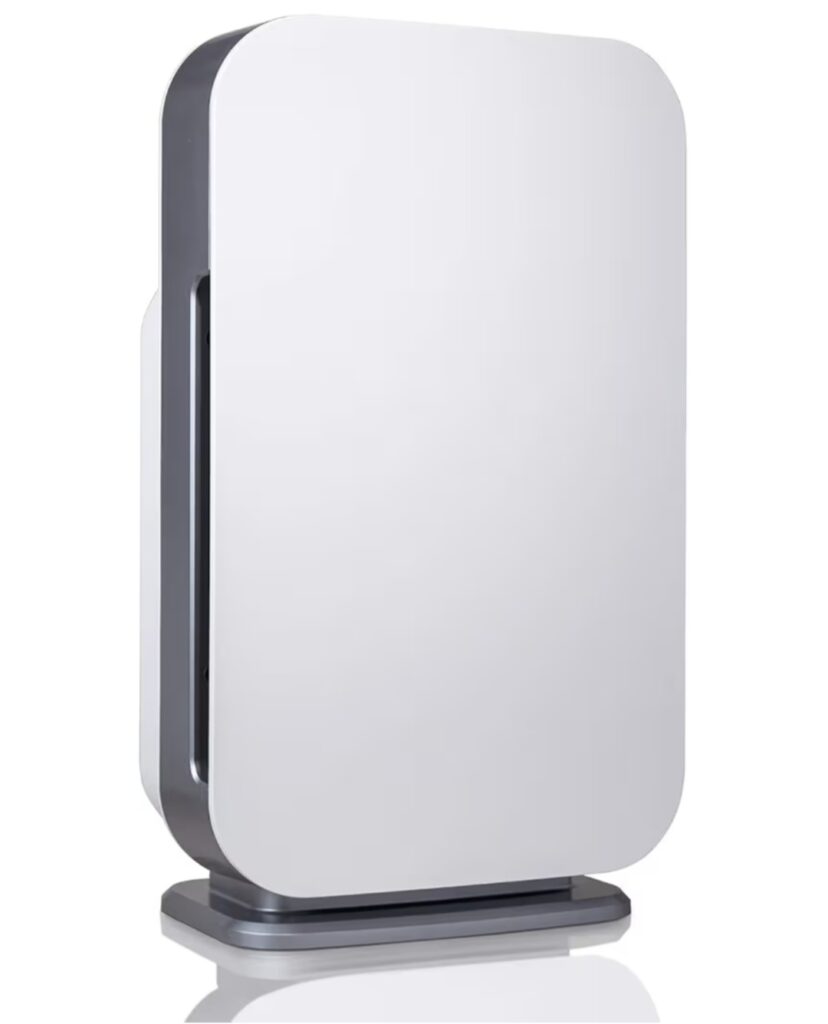
currently $371 on sale from $464. The fresh filter needs to be selected in order to get the voc removal. A less expensive option that does not clean vocs is:
Alen Breathesmart Flex Pure
Currently on sale for $279, normally $349.
As an amazon associate, I earn from qualifying purchases.
They have an Exchange Rate of 700 Sq. Ft in 30 Minutes, 1400 Sq. Ft in 1 hour which means it cleans through all of the air in a 1000 Sq. Ft room in 1 hour.
I also own and use other Alen Air purifiers, Honeywell, and Mila air purifier. Many of them have HEPA filters and offer the activated carbon upgrades.
How Indoor Air Quality Affects Your Health:
Poor indoor air quality can impact health in both immediate and long‑term ways.
Short‑Term Health Effects
– Eye, nose, and throat irritation
– Headaches
– Dizziness
– Fatigue
– Worsening of asthma or allergy symptoms
These symptoms are often linked to VOC exposure, elevated particulate matter, or poor ventilation.
Long‑Term Health Effects
Chronic exposure to indoor air pollutants may contribute to more serious conditions, including:
– Asthma development in children
– Chronic obstructive pulmonary disease (COPD)
– Cardiovascular disease
– Reduced lung function
– Certain cancers (from long‑term VOC exposure)
– Cognitive effects and reduced concentration
Fine particulate matter (PM2.5) is concerning because it can penetrate deep into the lungs and even enter the bloodstream.
Vulnerable Populations
Some groups are especially sensitive to poor indoor air quality:
– Children (developing lungs and immune systems)
– Elderly individuals
– People with asthma or allergies
– Individuals with heart or lung disease
– Pregnant women
Improving indoor air quality can significantly improve quality of life for these populations.
Combining HEPA and Carbon for Best Results
For most homes, the most effective solution is an air purifier that combines:
-True HEPA filtration for particles
– Substantial activated carbon for VOCs and odors
I personally have HEPA filters with activated carbon filters to remove VOCs.
This combination addresses both major categories of indoor air pollution: particulate matter and gaseous contaminants.
Improving Indoor Air Quality Beyond Air Purifiers
Air purifiers are powerful tools, but they work best when combined with other strategies:
– Increase ventilation with fresh outdoor air when possible
– Use low‑VOC paints, finishes, and furniture
– Avoid smoking indoors
– Control humidity to prevent mold growth
– Maintain HVAC systems and replace filters regularly
Conclusion
HEPA filters and air purifiers play an important role in improving indoor air quality, but they are not interchangeable terms. HEPA filters excel at removing airborne particles such as dust, pollen, mold spores, smoke particles, and pet dander. However, they do not remove gases or VOCs. To address chemical pollutants and odors, air purifiers must include activated carbon or specialized adsorption media.
Understanding the differences between these technologies allows consumers to choose what type of air purifier they may want to purchase based on their needs whether that is allergy relief, asthma management, wildfire smoke protection, or VOC reduction. Since indoor air quality has a direct and significant impact on human health, investing in the right air purifier for you is not just a matter of comfort, but of long‑term well‑being.
Sources:
World Health Organization
https://www.who.int/news-room/feature-stories/detail/what-are-the-who-air-quality-guidelines
https://www.hepacart.com/blog/dont-be-fooled-by-hepa-filter-types-standard-and-approved-filters#:~:text=What%20is%20a%20HEPA%20Filter,are%200.3%20micrometers%20in%20diameter
https://cdn.who.int/media/docs/default-source/searo/india/news-pdf/advisory-for-air-pollution.pdf?sfvrsn=8407dff2_2
 Jill
Jill