Sun. Jan 11th, 2026

2026

Pattern Interrupts to Take Control of Your Thoughts and Reactions

A pattern interrupt is something that you do that can stop negative thoughts in their tracks.

Pattern interrupts can also help you make new habits and shift your automatic reactions to situations to help you react to stress in a way that makes you feel more in control of your reactions and help stop overthinking. Read more to gain control of your thoughts.

Here are some pattern interrupts that can be used when you feel overwhelmed:

• Go to the bathroom, at home or work

• Inhale to the count of 8 and exhale to the count of 8, 3 times or any similar breathing exercise.

• Refer to your list of what makes you happy or calms you down.

• Use headphones in the stall, read a book for just 2 or 3 minutes.

• Fidget with a stress ball.

• Read an article. Take your mind off of spiraling thoughts, reduce overthinking, and take a break from stress by spending a few minutes reading.

• Go on Pinterest to look at photos of trees or nature which have been proven by studies to calm us down. Just looking at pictures of trees helps calm your nervous system.

• Read a few pages in a book.

• Distract yourself from the emotion, not to avoid the emotion, but to calm down and handle your day. We will discuss how to process the emotion and deal with it in the evening when you are alone.

Try to move out of the spiraling thoughts or overwhelming emotion first in order to get some distance from it.

The goal here is to calm your body. It is not avoiding emotions.

Later is usually better for analyzing the cause of the overwhelm or negative thought spiral. Wait for when you have some distance from the emotion.

The pattern interrupt is there to distract you and stop the negative thought spirals.

More Pattern Interrupts:

• Smelling something

• Name 5 things you see, 4 things you hear, 3 things you feel, and 2 things you smell to bring your pre-frontal cortex back on board. That is the part of your brain that can problem solve. This can help shift off the lymbic system which is the part of the brain that can make you feel anxious and controls “fight or flight” reactions.

• Listening to music, or cold exposure like an ice cube or cold water.

• Washing your hands with warm water has been proven in studies to relax the nervous system.

• Stretch or walk for a few minutes.

• Change rooms or environments.

• Journal

• Stand in “superhero” pose for 2-10 minutes which has been proven in studies to reduce cortisol and raise testosterone.

• Force smile for 2 to 10 minutes.

• In studies, smiling has been shown to improve mood, even if it is fake. It sends signals to your body that everything is okay.

• Stand on 1 foot for 30 seconds.

• Count backwards from 100 subtracting 7 each time.

The goal is to reset your nervous system and regain control of your brain’s prefrontal cortex. These activities can shut off the part of the brain that lead to excessive thought spirals and help your mind be more focused again and ready to problem solve.

Thinking negatively for a long period of time can lead to chronic moods, increase depression or anxiety, and loss of joy.

You can release the thought by writing down 1 or 2 sentences and review those thoughts later in the day when you have some time to yourself.

Track your thoughts for a week.

When you reread your thoughts, notice any recurring thoughts and patterns and try to find the cause of any negative thought or mood. Think of all of the pressure you have in your life or pressure you put on yourself.

Another type of pattern interrupt is…Shifting your thoughts:

Try to find a slightly better thought that you can write down next to the negative thoughts and use this list you made during the previous week to pick 1 thought to practice replacing for a week.

Write down this new thought.

Keep improving only this 1 thought in order to make a permanent change and bring it to arwareness.

Find “the next best feeling thought” that is slightly better than, “I am stuck in this dead-end job” or “My child is always making me late.”

For example, it could be:

“I am going to find something to make me feel better today at work.”

“I am going to give my child a few rules about the morning with rewards to see if I can get them more independent and ready on time.”

These are just generic examples.

Maybe you would feel better at work if you are looking for more jobs during 5 minutes a day.

It may make you feel more empowered to see if there are others opportunities out there.

The goal is to find thoughts that give you courage or power to change the situation and not feel stuck.

You will begin to feel more in control of your life after practicing pattern interrupts and replacing negative thoughts with a slightly better thought.

Stopping thought spirals will help you to be more centered and able to take new steps towards change.

Journal Prompts to Help You Become Your Ideal Self and Feel Amazing Every day

You can decide who you want to be and how you want to show up to the world and to your loved ones. Building awareness of our thoughts and feelings is key in order to change them in a way that helps you feel happy and centered.

What if you could feel amazing everyday?

You can help shift how you feel with the following introspective questions to ask yourself. Read more to find out how.

Think of your ideal life and ideal self so you can be intentional with how you spend you think and react.

How would you act, dress, and respond to others and to life?

What kind of thoughts would your ideal self have?

What would your ideal self say to do about your situation?

Talk to yourself using how your ideal self would speak to you and have a voice of a kind friend, not one of judgement.

What would you tell your best friend or Mom to?

Who do you want to be?

You get to choose how you show up in life.

You get to choose who you will be and if you do not like something, you can change it.

You get to create a life you love.

Journaling and gratitude have been proven in studies to reduce depression and anxiety.

Even if you are not depressed or anxious, briefly writing down what you are grateful for (3-5 things) can improve your mood over time.

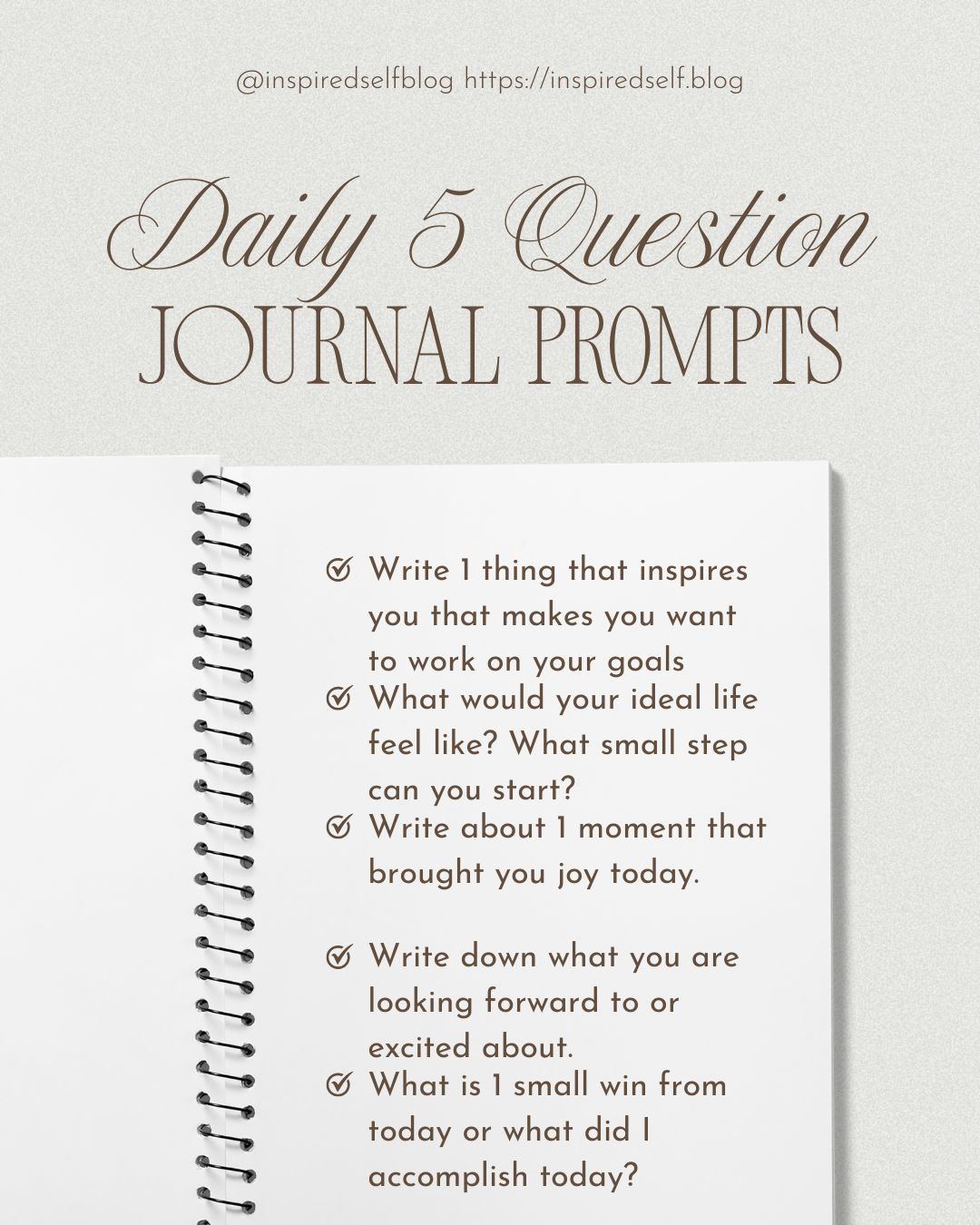
Journal prompts:

“What am I feeling right now and why?” and

“What feeling goes with the thoughts I had earlier.”

Ask yourself, “Why do I think or feel this way?”

“Is this a new experience or does it keep showing up?”

“What will I do about these feelings so they can be changed/transmuted?”

Reduce anxiety:

Try to find the cause and try to find a slightly better thought you can have that temporarily replaces thr anxious/worrying thought. Write it down.

Keep improving this thought either throughout the day or the week.

Make a “daily thoughts” journal.” The journal may include:

“What am I feeling right now and why” and “What feeling goes with the thoughts I had earlier.”

Ask yourself, “Why do I think or feel this way?”

“Is this a new experience or does it keep showing up?”

“What will I do about these feelings so they can be changed/transmuted?”

I hope some of these tips help you feel in more control of your life and to have thoughts become more intentional in shaping the life of your dreams!

It all starts with one small change at a time.

Use These 9 Pattern Interrupts to Stop Anxious Thoughts

Pattern Interrupts: Identifying and Reframing Spiraling Thoughts with 9 Strategies

What is a pattern interrupt?

A pattern interrupt is a way to stop intrusive thoughts or habits in your life that may be repeating or causing you undesired outcomes.

  1. One of the first steps towards improving your life is becoming aware of your habits and patterns. Negative thought spirals can become a habit. Read on to find out how to become aware of your thoughts and strategies for creating more empowering ones.

How do we pattern-interrupt?

  1. Interrupt the thought. Think of a word like, “Stop” when you notice thoughts taking off and leading to more and more negative thoughts.

Any “what if” thoughts, or “I should” can be interrupted with listing things in your mind that you recently did well.

  1. Find 1 step that could improve your situation. Tell yourself:

You do not need to change everything at once. That would not be possible. The goal is to feel better right now and make 1 step towards a new change.

Making sure you make only one change at a time can help you form new habits without overwhelming you.

  1. Write down a list of 5 to 10 things you are anxious or worried about and list 1 or more action steps you can take. When I was worried about my Grandpa’s health, my action step was giving him a call or a visit.
  2. Start to take a mental or written inventory of what you do everyday when you first wake up to gain awareness of your thoughts and habits.

What’s your morning routine? It may be best to pay attention to this for a few days and write it down or take short notes as you go throughout your day.

The very first things you do when you first wake up can set the tone/mood for the day whether you are aware of it or not.

Become aware of your thoughts:

Write down a few thoughts you may have like, “I wish I didn’t have to go to work today,” or “Why can’t my boss stop micromanaging?” Or it can be automatic thoughts you have about your appearance, “I look tired” or maybe you have positive thoughts.

Write those down too. The key is finding what you habitually think and noticing patterns.

Our thoughts influence how we feel. Emotions are a guidance system. They are there to tell you if something is good, bad, or off. Emotions can guide you on what needs to change in your life and what is going well. The key is learning how to use emotions to help you. Sometimes you may not be sure what emotion you are feeling. That is why writing down your thoughts for a week can be helpful to helping you figure out what is causing bad moods, anxiety, or stress.

  1. Self awareness is noticing how you feel and think and why. Without being aware, you can get stuck in cycles and loops that keep repeating. You may keep having the same bad experiences and attracting the same types of people into your life. This can be due to subconscious thoughts, fears, and habits. We want to bring what is subconscious to the surface.

Sometimes we notice a slight lingering, perhaps a feeling of sadness, but are unaware of the cause. Writing down thoughts for a few days, (brief notes in your phone will do) can help you identify any patterns.

If something triggered you, where you feel angry, frustrated, maybe an antsy feeling, write down what triggered you.

You may have honked the horn at someone. Write down what the car did and how you felt. Maybe you thought they’d hit you and why do they drive crazy and endanger people or that they are stupid.

Then analyze this thought later when the emotion calmed down.

Analyze it without emotion. Try to analyze it with curiosity.

  1. Reframe what happened. Reframing is where we brainstorm other possibilities of what could have been happening. We only know our perspective and do not see what is happening in the other car.

Maybe the driver was late to work and if they are late one more time, they’ll lose their job. Maybe they spilled their coffee on them. They do not know you and did not personally attack you by cutting you off. You will notice times of day where people drive more recklessly. Is there a way to respond calmly and not let it ruin your day in the future?

The car is just one example. It may be your child frustrated you in the morning. Maybe they are hard to get out of bed and are making you late every day.

Then analyze this thought later when the emotion calmed down. Analyze it without emotion. Try to analyze it by using curiosity with questions like:

  • What else is going on my life that could be making me overwhelmed?
  • Could this reaction be related to something else?

Sometimes we are annoyed with our partner, but really we have a deeper problem either in the relationship or in our lives that is making us irritated by little things.

  1. Replace thoughts like:

“I’m stuck” with thoughts like:

“I am so close” or “I am on the verge of a break-through.”

If you have a very bad mood and negati thoughts, find a list of things that cheer you up (make this list ahead of time because it will help you when you are triggered).

Again, try to separate yourself from the emotions first.

9. Take a breath, write down that you felt frustrated by ____as soon as you have a chance. In the evening, read your notes from the day and think of why this is frustrating you.

Keep reading to find ways to change these thoughts and possibly the situation.

Only spend a few seconds during the day writing it down as it comes up so you don’t forget (a note in your phone will work) and 2 minutes at the end of the day.

Sometimes taking 5 minutes to yourself can do wonders when you feel very overwhelmed and stressed.

What is a HEPA Filter and What Kinds of Air Purifiers Remove VOCs?

HEPA Filters, Air Purifiers, and Indoor Air Quality: Understanding the Differences and Health Impacts

Indoor air quality plays a crucial role in human health, comfort, and productivity. In modern life, people spend an estimated 90% of their time indoors: at home, work, school, or other enclosed spaces.

Unfortunately, indoor air can often be more polluted than outdoor air due to trapped contaminants, synthetic building materials, household products, and limited ventilation. This has led to growing interest in air purifiers, HEPA filters, and other technologies designed to clean the air we breathe.

This article explores what HEPA filters and air purifiers are, how they differ, what types of particles and pollutants they remove (including volatile organic compounds or VOCs), and how indoor air quality affects human health.

What Is a HEPA Filter?

A HEPA (High‑Efficiency Particulate Air) filter is a mechanical air filter designed to capture extremely small airborne particles. To meet official standards in the United States, a true HEPA filter must remove at least 99.97% of particles that are 0.3 microns in diameter.

HEPA filters are made from a dense mat of randomly arranged fibers, typically composed of fiberglass. Air passing through the filter must navigate through many fibers, where particles are captured through several physical mechanisms:

Interception: Particles following airflow paths come close enough to a fiber and stick to it.

Impaction: Larger particles collide directly with fibers due to inertia.

Diffusion: Very small particles move erratically (Brownian motion) and are more likely to hit and adhere to fibers.

Importantly, HEPA filters do not rely on chemicals, electricity, or ionization. They are purely mechanical devices.

What Is an Air Purifier?

An air purifier is a broader category of devices designed to improve indoor air quality by removing or neutralizing airborne contaminants. Air purifiers may use one or more technologies, including:

– HEPA filtration

– Activated carbon filters

– UV‑C light

– Ionizers

– Electrostatic precipitation

– Photocatalytic oxidation (PCO)

In other words, a HEPA filter is one component that may be used inside an air purifier, but not all air purifiers use HEPA filters. The effectiveness of an air purifier depends on the technologies it employs and how well they are implemented.

Key Differences Between HEPA Filters and Air Purifiers:

HEPA filters remove particles while air purifiers may remove particles, gases, odors, and sometimes microorganisms depending on their design.

What Types of Particles Do HEPA Filters Remove?

HEPA filters are extremely effective at removing particulate matter including:

  1. Dust and Dust Mites

Common household dust contains skin cells, fabric fibers, soil particles, and microscopic debris. HEPA filters trap these particles before they recirculate in the air.

  1. Pollen

Pollen grains from trees, grasses, and weeds are a major trigger for seasonal allergies. HEPA filters are highly effective at capturing pollen.

  1. Pet Dander

Pet dander consists of tiny flakes of skin shed by cats, dogs, and other animals. These particles are small enough to remain airborne and easily inhaled, making HEPA filtration particularly helpful for allergy sufferers.

  1. Mold Spores

Mold reproduces by releasing spores into the air. HEPA filters can capture these spores, although they do not kill mold growing on surfaces.

  1. Smoke and Soot Particles

HEPA filters can remove fine particulate matter from wildfire smoke, tobacco smoke particles, and combustion byproducts (but does not remove the gases).

6. Bacteria and Some Viruses

Many bacteria and virus‑carrying droplets are attached to larger particles, which HEPA filters can capture. However, HEPA filters do not “kill” microorganisms; they only trap them.

What HEPA Filters Do NOT Remove:

Despite their effectiveness, HEPA filters have important limitations. They cannot remove gases or odors, including:

– Volatile organic compounds (VOCs)

– Carbon monoxide

– Nitrogen dioxide

– Ozone

– Chemical fumes

These pollutants are molecular in size and pass straight through HEPA fibers.

What Are VOCs (Volatile Organic Compounds)?

Volatile organic compounds (VOCs)** are gases emitted from solids or liquids at room temperature. They are common indoors and originate from:

– Paints, varnishes, and adhesives

– Cleaning products and disinfectants

– Air fresheners and scented candles

– Furniture, carpets, and pressed wood products

– Cosmetics and personal care products

– Gas stoves and fuel‑burning appliances

Some VOCs cause short‑term irritation, while others are associated with long‑term health risks.

Which Air Purifiers Remove VOCs?

To remove VOCs, an air purifier must include activated carbon or other adsorbent materials.

Activated Carbon Filters:

Activated carbon is a highly porous material with an enormous surface area. VOC molecules adhere to the carbon surface through a process called **adsorption**.

The effectiveness of VOC removal depends on:

– The amount (weight) of carbon used

– The type of carbon (coconut shell, coal‑based, etc.)

– Air contact time (slower airflow improves adsorption)

Thin carbon pre‑filters found in many consumer air purifiers may reduce odors slightly but are often insufficient for meaningful VOC removal. High‑quality VOC‑focused purifiers use several pounds of activated carbon or blended media.

Other VOC‑Related Technologies

Photocatalytic Oxidation (PCO): Uses UV light and a catalyst to break down VOCs, though some systems may produce byproducts.

Chemisorption Media: Specialized materials designed to target specific chemicals such as formaldehyde.

Do HEPA Filters Remove VOCs?

No, HEPA filters do not remove VOCs or odors, but there are air purifiers designed to remove VOCs and odors. A purifier must include activated carbon or similar voc removing filter to address gaseous pollutants.

I use HEPA filters with an activated carbon filter to remove vocs. I want to upgrade to a powerful voc removing air purifier that is $900-$1000 someday. I will link the air purifiers I currently use and the ones I want to try in another article and below is my favorite air purifier so far:

Alen Breathesmart Flex Fresh

Removes vocs and has the activated carbon filter.

https://amzn.to/4b66Sr1

currently $371 on sale from $464. The fresh filter needs to be selected in order to get the voc removal. A less expensive option that does not clean vocs is:

Alen Breathesmart Flex Pure

Currently on sale for $279, normally $349.

https://amzn.to/4r0X5XZ

As an amazon associate, I earn from qualifying purchases.

They have an Exchange Rate of 700 Sq. Ft in 30 Minutes, 1400 Sq. Ft in 1 hour which means it cleans through all of the air in a 1000 Sq. Ft room in 1 hour.

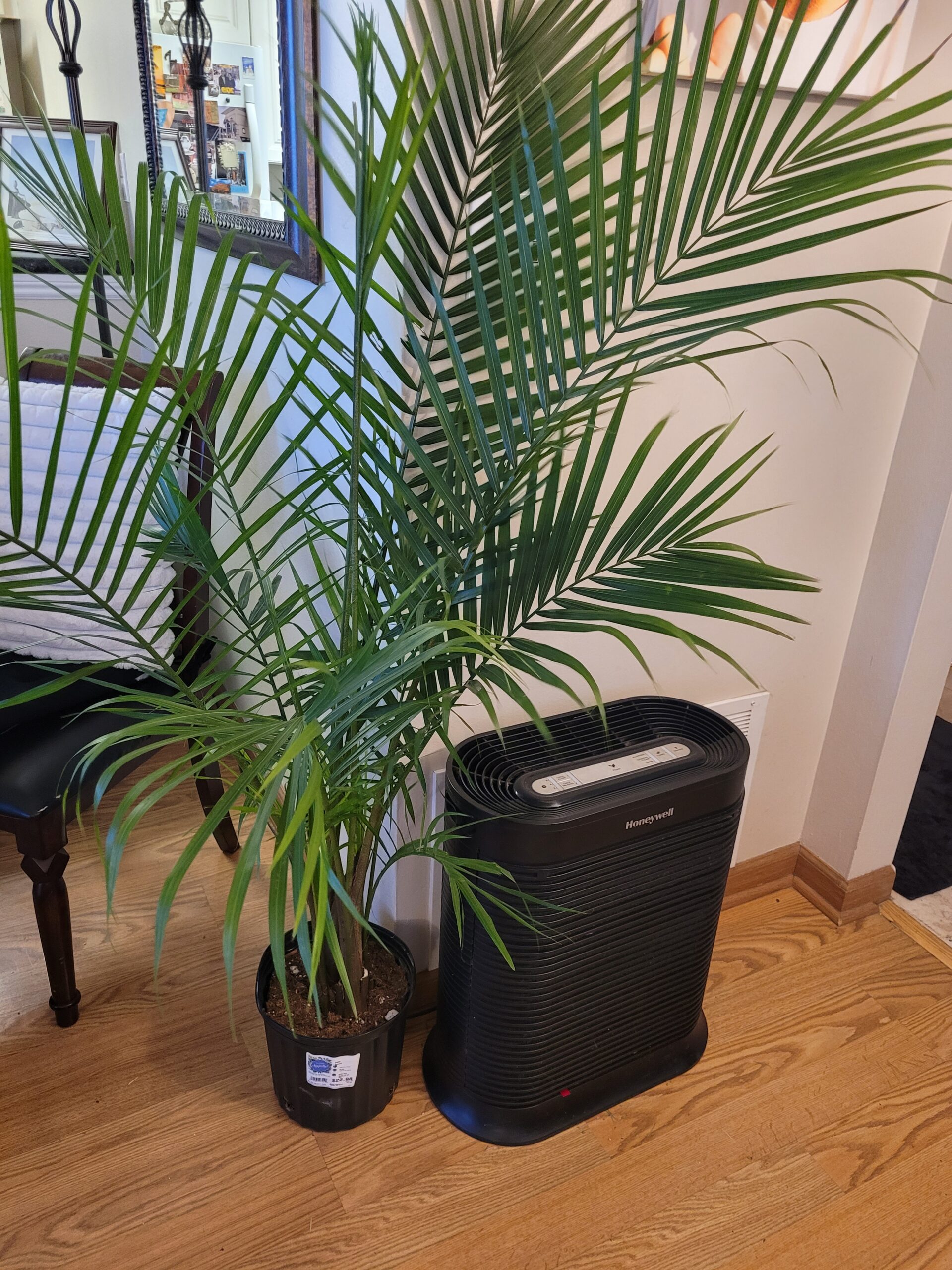
I also own and use other Alen Air purifiers, Honeywell, and Mila air purifier. Many of them have HEPA filters and offer the activated carbon upgrades.

How Indoor Air Quality Affects Your Health:

Poor indoor air quality can impact health in both immediate and long‑term ways.

Short‑Term Health Effects

– Eye, nose, and throat irritation

– Headaches

– Dizziness

– Fatigue

– Worsening of asthma or allergy symptoms

These symptoms are often linked to VOC exposure, elevated particulate matter, or poor ventilation.

Long‑Term Health Effects

Chronic exposure to indoor air pollutants may contribute to more serious conditions, including:

– Asthma development in children

– Chronic obstructive pulmonary disease (COPD)

– Cardiovascular disease

– Reduced lung function

– Certain cancers (from long‑term VOC exposure)

– Cognitive effects and reduced concentration

Fine particulate matter (PM2.5) is concerning because it can penetrate deep into the lungs and even enter the bloodstream.

Vulnerable Populations

Some groups are especially sensitive to poor indoor air quality:

– Children (developing lungs and immune systems)

– Elderly individuals

– People with asthma or allergies

– Individuals with heart or lung disease

– Pregnant women

Improving indoor air quality can significantly improve quality of life for these populations.

Combining HEPA and Carbon for Best Results

For most homes, the most effective solution is an air purifier that combines:

-True HEPA filtration for particles

– Substantial activated carbon for VOCs and odors

I personally have HEPA filters with activated carbon filters to remove VOCs.

This combination addresses both major categories of indoor air pollution: particulate matter and gaseous contaminants.

Improving Indoor Air Quality Beyond Air Purifiers

Air purifiers are powerful tools, but they work best when combined with other strategies:

– Increase ventilation with fresh outdoor air when possible

– Use low‑VOC paints, finishes, and furniture

– Avoid smoking indoors

– Control humidity to prevent mold growth

– Maintain HVAC systems and replace filters regularly

Conclusion

HEPA filters and air purifiers play an important role in improving indoor air quality, but they are not interchangeable terms. HEPA filters excel at removing airborne particles such as dust, pollen, mold spores, smoke particles, and pet dander. However, they do not remove gases or VOCs. To address chemical pollutants and odors, air purifiers must include activated carbon or specialized adsorption media.

Understanding the differences between these technologies allows consumers to choose what type of air purifier they may want to purchase based on their needs whether that is allergy relief, asthma management, wildfire smoke protection, or VOC reduction. Since indoor air quality has a direct and significant impact on human health, investing in the right air purifier for you is not just a matter of comfort, but of long‑term well‑being.

Sources:

World Health Organization

https://www.who.int/news-room/feature-stories/detail/what-are-the-who-air-quality-guidelines

https://www.hepacart.com/blog/dont-be-fooled-by-hepa-filter-types-standard-and-approved-filters#:~:text=What%20is%20a%20HEPA%20Filter,are%200.3%20micrometers%20in%20diameter

https://cdn.who.int/media/docs/default-source/searo/india/news-pdf/advisory-for-air-pollution.pdf?sfvrsn=8407dff2_2